
Small businesses are rushing to embrace artificial intelligence, and for good reason. AI promises to streamline operations, boost productivity, and level the playing field with larger competitors. AI also creates new opportunities for small businesses to innovate, grow, and compete more effectively. But here’s the reality: most small businesses are making costly mistakes that turn their AI investments into expensive headaches instead of competitive advantages.
Artificial intelligence is rapidly becoming an essential emerging technology, not only for small businesses but also for nonprofits seeking to enhance their impact and align with organizational values.
The good news? These pitfalls are entirely preventable. Whether you’re just starting your AI journey or struggling with current implementations, understanding these common mistakes: and their solutions: can transform your approach and maximize your technology investment.
Mistake #1: Jumping Into AI Without Clear Business Objectives
The biggest mistake small businesses make is implementing AI because it’s trendy, not because it solves specific
- Mistake #1: Jumping Into AI Without Clear Business Objectives
- Mistake #2: Feeding Your AI System Garbage Data
- Mistake #3: Skipping Employee Training and Change Management
- Mistake #4: Choosing the Wrong Generative AI Solution for Your Business
- Mistake #5: Over-Automating and Losing the Human Touch
- Mistake #6: Ignoring Integration and Infrastructure Requirements
- Mistake #7: Treating Responsible AI as a Set-and-Forget Solution
- Overlooking AI Governance and Responsible Frameworks
- Moving Forward with Confidence
This approach is like buying a sports car when what you really need is a reliable work truck. Without clear objectives, you’ll end up with sophisticated tools that don’t address your actual business challenges.
How to Fix It:
Start by identifying specific pain points in your business operations. Are customers waiting too long for responses? Is manual data entry eating up productive hours? Are you struggling to track inventory accurately?
Document three to five measurable goals for your AI implementation. For example:
- Reduce customer response time from 4 hours to 30 minutes
- Decrease data entry errors by 80%
- Automate 60% of routine administrative tasks
After setting your goals, organizations should develop clear strategies for AI adoption that align with your business objectives. Effective strategies should combine the right AI tools and approaches to maximize impact and ensure your efforts are focused on real organizational needs.
Once you have clear objectives, evaluate AI solutions based on their ability to address these specific needs, not their impressive feature lists.

Mistake #2: Feeding Your AI System Garbage Data
AI systems are only as good as the data you feed them. Many small businesses dive into AI implementation with messy, inconsistent, or incomplete data sets. The result? AI tools that make poor recommendations, target the wrong customers, or provide inaccurate insights.
Think of it this way: if you wouldn’t trust a decision based on your current data, why would you expect an AI system to make better choices with that same information?
How to Fix It:
Before implementing any AI solution, conduct a thorough data audit. This means:
- Cleaning duplicate entries and correcting inconsistencies
- Standardizing data formats across all systems
- Identifying and filling critical information gaps
- Establishing ongoing data quality processes
Additionally, conducting research on your data sources and collection methods—similar to prospect research and predictive data analysis—can further improve the quality and effectiveness of your AI implementation. For nonprofits, analyzing donor giving history is especially valuable, as it helps tailor AI-driven fundraising strategies and improve relationship management.
Start small with well-defined, high-quality data sets rather than trying to process everything at once. For instance, begin with your most engaged customers’ data before expanding to your entire database.
Mistake #3: Skipping Employee Training and Change Management
Here’s a scenario that plays out in countless small businesses: leadership invests in an impressive AI tool, announces its implementation, and expects immediate results. Instead, they find employees avoiding the new system, using workarounds, or making costly mistakes.
AI tools require users who understand how to leverage their capabilities effectively. Without proper training, even the most powerful AI solutions become expensive paperweights.
How to Fix It:
Invest in comprehensive training before rolling out AI tools. This doesn’t mean sending everyone to expensive seminars: focus on practical, hands-on learning that relates directly to daily tasks.
Create a phased rollout plan:
- Start with power users who can become internal advocates
- Develop simple, step-by-step guides for common tasks
- Schedule regular check-ins to address questions and concerns
- Celebrate early wins to build enthusiasm
It’s essential to include every staff member in training to ensure equitable and informed AI adoption across your organization.
Remember, successful AI implementation is as much about people as it is about technology. Make your team partners in the process, not casualties of it.
Involving community members in the AI adoption process can further promote inclusivity and buy-in.

Mistake #4: Choosing the Wrong Generative AI Solution for Your Business
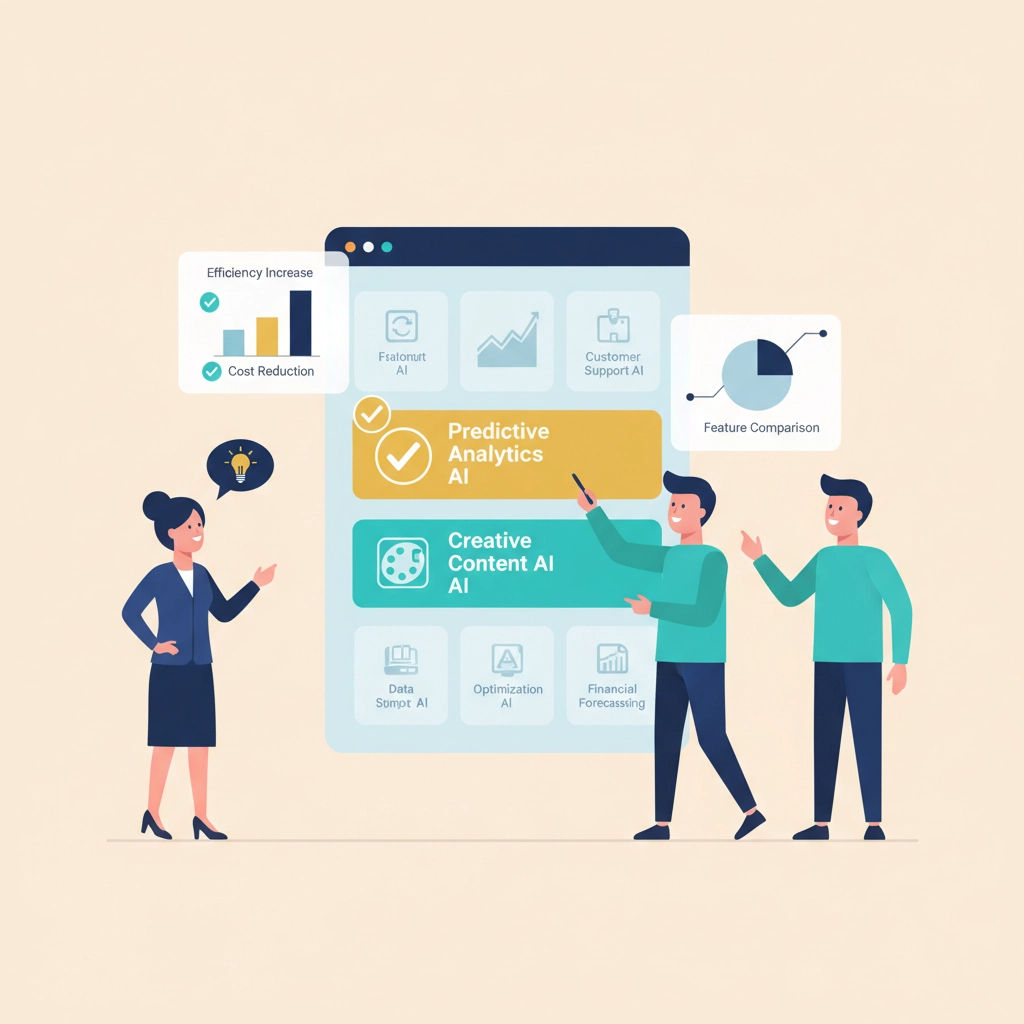
Not all AI solutions are created equal, and what works for a Fortune 500 company might be overkill for a small business. Many entrepreneurs get dazzled by feature-rich platforms without considering whether those capabilities align with their actual needs, budget, or technical resources.
How to Fix It:
Before evaluating any AI solution, create a clear requirements checklist:
- What specific problems must this tool solve?
- What’s your realistic budget for implementation and ongoing costs?
- How complex can the solution be given your team’s technical skills?
- Does it integrate with your existing systems?
- Does it integrate seamlessly with your current workflows?
- What level of customer support do you need?
Start with simpler, more focused solutions rather than comprehensive platforms. Many successful AI implementations begin with single-purpose tools that prove their value before expanding to more complex systems. Nonprofit AI tools, for example, are designed to address the unique needs of nonprofits and often integrate seamlessly with existing nonprofit workflows.
For small businesses, user-friendly platforms with strong customer support often provide better long-term value than feature-heavy alternatives that require extensive technical expertise.
Mistake #5: Over-Automating and Losing the Human Touch
AI’s efficiency can be intoxicating. Why have humans handle customer inquiries when chatbots can respond instantly? Why review reports manually when AI can generate them automatically?
The problem is that excessive automation often feels impersonal to customers and can damage the relationships that small businesses depend on for success.
How to Fix It:
Use AI to enhance human capabilities, not replace human judgment and creativity. The goal should be to free your team from repetitive tasks so they can focus on high-value and complex tasks that require emotional intelligence, problem-solving, and relationship building. In nonprofit work, even as AI is adopted to improve efficiency, maintaining human relationships and advancing the mission remain essential.
Create clear guidelines for when AI should handle tasks versus when human intervention is needed:
- Automate routine inquiries but escalate complex or sensitive issues that require human expertise
- Use AI for data analysis but have humans interpret results and make strategic decisions
- Let AI handle scheduling and basic customer service while preserving personal touchpoints for important interactions
The most successful AI implementations create more time for meaningful human connections, not fewer opportunities for them.
Mistake #6: Ignoring Integration and Infrastructure Requirements
Many small businesses select AI tools in isolation, only to discover they don’t play well with existing systems. Poor integration creates data silos, duplicated efforts, and workflow disruptions that can actually reduce efficiency. Additionally, a reliable internet connection is essential for accessing most AI technology solutions, especially those that are cloud-based.
How to Fix It:
Before committing to any AI solution, map out your current technology stack and identify potential integration points. Key questions to ask include:
- Does this AI tool connect with your CRM, accounting software, and email systems?
- Can data flow seamlessly between systems without manual intervention?
- Are there API limitations or additional costs for integrations?
- What technical support is available for setup and ongoing maintenance?
- Does the AI technology require a constant internet connection for optimal performance?
Test integrations thoroughly in a controlled environment before full deployment. Many AI vendors offer trial periods or sandbox environments that allow you to verify compatibility without disrupting operations.
If you’re working with multiple business systems, consider partnering with IT professionals who can ensure smooth implementation and ongoing support.
Mistake #7: Treating Responsible AI as a Set-and-Forget Solution
Perhaps the most dangerous mistake is assuming that AI implementation is a one-time project. Many small business owners expect to set up their AI tools and watch productivity soar without any ongoing attention or optimization.
In reality, AI systems require continuous monitoring, adjustment, and improvement to deliver optimal results. Markets change, customer behavior evolves, and business needs shift: your AI systems must adapt accordingly.
How to Fix It:
Establish regular review processes to evaluate AI performance against your original objectives. Responsible AI use requires ongoing oversight to mitigate risks such as data breaches, bias, and legal issues, and to ensure ethical outcomes. Schedule monthly or quarterly assessments that examine:
- Are the AI tools meeting their performance targets?
- Have business needs changed in ways that require system adjustments?
- Are there new features or capabilities that could improve results?
- What feedback are employees and customers providing about AI interactions?
Create a culture of continuous improvement where team members feel comfortable suggesting modifications and experimenting with new approaches. The most successful AI implementations evolve constantly based on real-world feedback and changing business requirements.
Preparing your business for the future means staying informed about AI advancements and being ready to adapt your systems as technology continues to evolve.
Overlooking AI Governance and Responsible Frameworks
As nonprofits embrace AI tools to streamline operations and amplify their mission impact, many miss a vital piece of the puzzle: responsible AI governance. Establishing clear governance principles and practices is essential to guide responsible AI use and ensure alignment with the nonprofit’s mission and values. Without a clear governance framework guiding your AI journey, even the most powerful technology can create risks that derail your mission and break trust with the donors, volunteers, and communities you serve. Responsible use of AI in nonprofits minimizes risks like data breaches and bias, ensuring that technology is used ethically and effectively. In fact, 58% of nonprofits have incorporated AI into their communications as of 2024, highlighting the growing reliance on these tools. Leveraging AI resources and videos can help educate nonprofit leaders and teams about responsible AI adoption, tailored to the unique needs of the nonprofit sector and its role in creating a more equitable world.
AI governance isn’t just another checkbox—it’s your roadmap to mission-aligned technology that protects what matters most. A solid governance framework empowers nonprofit leaders and teams to navigate both the tremendous opportunities and potential challenges of AI solutions like DonorSearch AI and other intelligent tools. AI can optimize a nonprofit’s operations, allowing staff to focus more on advancing their core missions and supporting the nonprofit’s goals. Predictive modeling can forecast donation trends, identify potential lapsed donors, and determine the optimal timing and ask amount for appeals, making outreach efforts more effective. It ensures your organization harnesses artificial intelligence in ways that honor your values, safeguard donor data, and keep you accountable to the communities you serve—turning technology into a true multiplier of your mission impact. Exploring (ai explore) the ethical implications of AI in nonprofit settings is crucial to ensure transparency, inclusivity, and responsible use. Interestingly, 68% of nonprofits use AI for data analysis, exceeding for-profit implementation rates, which underscores the importance of responsible governance.
Moving Forward with Confidence
Implementing AI successfully isn’t about avoiding all mistakes: it’s about learning from common pitfalls and building systems that can adapt and improve over time. Small businesses that approach AI strategically, with clear objectives and realistic expectations, often see better results than larger companies with bigger budgets but less focused implementations. Automate workflows, reduce manual tasks, and streamline operations, allowing them to dedicate more time to strategic work and mission-critical activities. AI can also automate routine tasks for nonprofit teams
Nonprofit professionals can leverage a range of AI tools for nonprofits, such as AI assistants, to generate content, manage social media content, and create ai generated images for marketing and branding. By using machine learning, these tools can analyze donor data and tailor outreach to the target audience, improving engagement and fundraising outcomes. Microsoft Copilot can further streamline daily workflows for nonprofit teams, making collaboration and productivity more efficient. Videos and other content creation tools help engage supporters and communicate the nonprofit’s mission effectively. Additionally, AI tools can assist nonprofits in finding the right word choices and improving written communications for greater impact. AI also simplifies grant writing by helping to draft proposals, organize documents, and reuse content efficiently, saving time and resources for mission-critical activities. Nonprofits interested in funding to support these technological advancements should explore technology grants for nonprofits to access valuable resources and funding opportunities.
Remember that AI is a tool, not a solution. The real competitive advantage comes from combining AI capabilities with human insight, creativity, and relationship-building skills that larger competitors often struggle to maintain. For example, AI-powered chatbots can enhance user experience on nonprofit websites by answering common visitor questions, ensuring that human resources are focused on more complex and impactful interactions.
Frequently Asked Questions
How much should a small business budget for AI implementation? Start with 2-5% of your annual revenue for AI initiatives, focusing on solutions that address your most pressing operational challenges. Begin with lower-cost tools to prove value before investing in more expensive platforms. For nonprofits, AI can also help create personalized fundraising asks based on communication preferences and giving history, improving the effectiveness of campaigns and donor engagement.
How long does it typically take to see results from AI implementation? Most small businesses see initial results within 3-6 months for simple automation tools, while more complex implementations may take 6-12 months. The key is setting realistic expectations and measuring progress against specific objectives.
What’s the best first AI tool for small businesses? Customer service chatbots, email marketing automation, and basic data analytics tools typically provide the quickest wins with minimal complexity. AI-powered chatbots can answer questions from website visitors efficiently, improving customer experience and saving staff time. For nonprofits, these chatbots can also answer common visitor questions on nonprofit websites 24/7, ensuring consistent engagement and freeing up staff for more strategic tasks. Choose based on your most significant operational pain points.
Do small businesses need dedicated IT staff to manage AI tools? Not necessarily. Many modern AI platforms are designed for business users, but having access to technical support: whether through vendors, consultants, or managed IT services: ensures smoother implementation and ongoing optimization.
How can small businesses ensure AI doesn’t replace their competitive advantages? Focus on using AI to enhance what makes your business unique rather than standardizing everything. Use automation for routine tasks while preserving the personal touch and specialized expertise that differentiate you from competitors.
The answers provided in this FAQ are for informational purposes only and do not necessarily reflect the official positions of any referenced organizations or technology providers.