
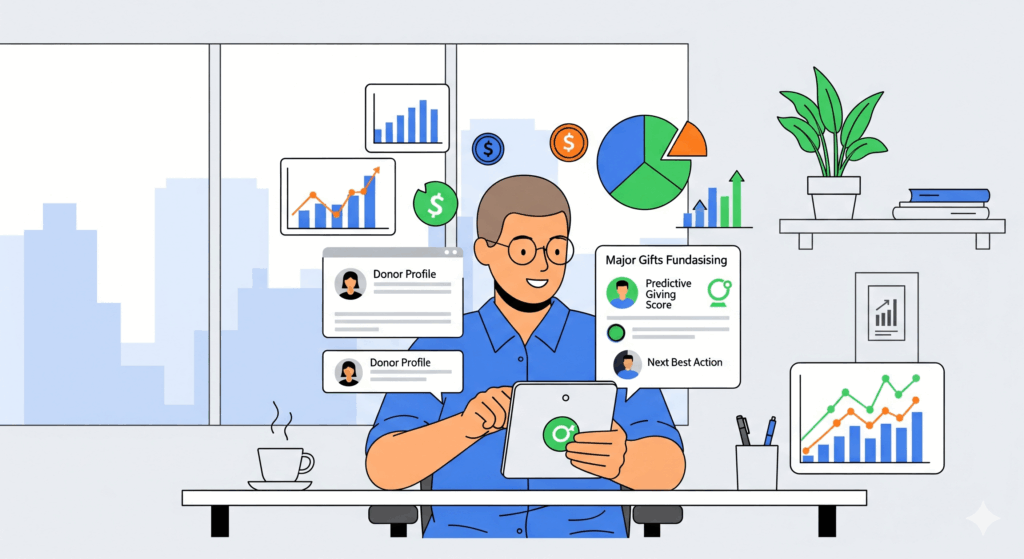
Major Gifts Fundraising in the AI Age: A Modern Guide for Nonprofits
Major gifts drive most nonprofit revenue. Here is how Scottship Solutions automates prospect research, cultivation, and donor stewardship with AI.

Major gifts drive most nonprofit revenue. Here is how Scottship Solutions automates prospect research, cultivation, and donor stewardship with AI.
Co-managed IT gives nonprofits with existing staff extra support without a full handoff. Here is how it works and when it makes more sense than full outsourcing.

TL;DR: Scottship Solutions breaks down Planned giving is a fundraising strategy where donors arrange charitable gifts in advance through their wills, trusts, retirement accounts, or life insurance policies , gifts that typically come from accumulated assets rather than current income. These legacy gifts are among the largest nonprofits ever receive,
TL;DR: Managed IT gives New Jersey nonprofits an ongoing, flat-fee partnership that monitors, secures, and supports their cloud tools before problems turn into crises, with 2025 pricing that typically runs $100 to $250 per user each month. Scottship Solutions delivers this with a nonprofit-focused, SaaS-first, security-first approach that covers help

TL;DR: A managed service provider (MSP) gives small businesses an outsourced IT department for a predictable monthly fee, typically $100 to $200 per user. You get 24/7 monitoring, cybersecurity, help desk support, backups, and strategic planning without hiring full-time IT staff. Scottship Solutions built this guide to help you compare
TL;DR: Since 2020, nonprofits have moved donor management, fundraising, program delivery, and backups to cloud platforms like Microsoft 365, Google Workspace, AWS, Azure, and Google Cloud, cutting IT costs and supporting remote teams. This guide explains the SaaS, PaaS, and IaaS service models, the security and compliance basics, and a

TL;DR: Most nonprofits already own the essential technology they need, from Google Workspace and Microsoft 365 to CRM and accounting platforms, yet use only a fraction of what those tools can do. The bigger win, as of 2026, is maximizing the return on software you already pay for before buying
TL;DR: Successful nonprofits share seven core traits: clear mission communication, strong operations, solid financial management, skilled people, strategic partnerships, willingness to learn, and smart use of technology. Start with a 12-month plan, diversify your funding so no single source exceeds 30% of revenue, and build 3-6 months of reserves. Scottship
TL;DR: Technology consulting gives small businesses access to strategic IT expertise without hiring full-time staff. Scottship Solutions assesses your current systems, builds a technology roadmap, strengthens cybersecurity, and aligns IT spending with business goals. Expect to pay $150-300/hour or $1,000-5,000/month for ongoing advisory services. Small businesses today face an unprecedented

TL;DR: AWS is the world’s largest cloud computing platform, with more than 200 services (compute like EC2, storage like S3, and databases like RDS) across 32 regions and pay-as-you-go pricing that can cut infrastructure costs 20 to 50 percent versus on premises hardware. This guide covers AWS services, global infrastructure,
Get Scottship’s research in your Google results