
TL;DR: AI for nonprofits enables smarter operations through automated donor outreach, predictive fundraising analytics, grant research, and workflow optimization without requiring technical staff. Adoption is accelerating across organizations of every size. This complete guide covers strategy, tool selection, implementation roadmaps, and ethical considerations for deploying AI across your nonprofit.
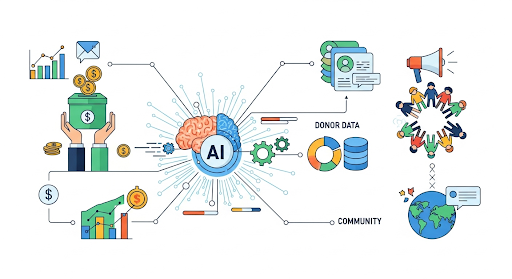
AI tools are changing how nonprofits handle everything from grant writing to volunteer coordination. But most organizations are still figuring out where to start and what is actually worth the investment. This guide cuts through the hype and covers practical AI applications that nonprofit teams are using right now.
AI for Nonprofits: The Complete Guide to Smarter Operations
Introduction
Nonprofits are under constant pressure: fewer staff, tighter budgets, and ever-growing community needs. Leaders often ask: How can we do more with less?
AI continues to evolve, offering nonprofit organizations new opportunities to address challenges and improve their operations.<
- AI for Nonprofits: The Complete Guide to Smarter Operations
- Introduction
- What Is AI for Nonprofits?
- Understanding Machine Learning for Nonprofits
- Why AI Matters for Nonprofits Right Now
- Top Use Cases of AI for Nonprofits
- AI Governance and Frameworks for Nonprofits
- Choosing the Right AI Tool
- AI Tools for Nonprofits: A Practical Comparison
- How to Safely Implement AI in Your Nonprofit
- Getting Started: Building Your AI Roadmap
- Generative AI and Future Trends
- Conclusion
Artificial Intelligence (AI) has moved beyond buzzwords. For a nonprofit organization, it’s a practical way to reduce burnout, reclaim time, and drive impact by amplifying mission impact. From streamlining grant writing to protecting sensitive donor data, AI is opening doors that used to be locked behind staffing or funding limits.
This guide explores AI for nonprofit organizations with real use cases, best practices, and steps to help your team move from overwhelmed to optimized.
What Is AI for Nonprofits?
AI refers to software that can mimic human intelligence – generating text, spotting patterns, or predicting outcomes. For nonprofits, that translates to fewer manual tasks and more capacity to focus on people. An AI platform designed for nonprofits can streamline workflows, provide real-time updates, and improve donor engagement by automating routine processes.
There are also AI resources, such as templates and specialized tools, created specifically for nonprofit organizations to support fundraising, marketing, content creation, and program management. Nonprofit AI tools can help with donor prospecting, fundraising support, marketing automation, and managing programs more efficiently.
Instead of endless spreadsheets and repetitive emails, AI tools can handle the heavy lifting. Think AI writing tools that draft grant applications, or predictive models that flag which donors are most likely to lapse. Key use cases include content creation, data analysis, and using AI to generate content for marketing and outreach. Natural language processing enables AI to understand and respond to human language, enhancing communication and content creation for nonprofits.
Understanding Machine Learning for Nonprofits
Machine learning is a powerful branch of artificial intelligence that enables computers to learn from data and improve their performance without explicit programming. In the nonprofit sector, machine learning can transform how organizations analyze complex data and make informed decisions. For example, nonprofits can use machine learning to identify patterns in donor behavior, predict which fundraising campaigns will be most successful, and personalize outreach to potential donors. By leveraging machine learning, nonprofit organizations can uncover insights hidden in their data, optimize fundraising strategies, and better serve their communities. Embracing machine learning allows nonprofits to move beyond guesswork and make data-driven decisions that drive greater impact.
Why AI Matters for Nonprofits Right Now
- Resource constraints: Teams of three often juggle the work of ten.
- Donor expectations: Supporters want timely, personalized outreach.
- Compliance pressure: Regulators demand secure handling of sensitive data.
Leveraging AI responsibly is crucial to ensure that its use aligns with the organization’s goals and ethical standards. Training on AI is necessary for informed decision-making in nonprofit organizations, ensuring that both staff and leadership can effectively integrate these tools into their operations. AI adoption should always support the nonprofit’s mission, helping organizations achieve their objectives while addressing sector-specific challenges.
Technology adoption in the nonprofit sector has lagged. Early adopters of AI are already seeing compounding advantages in efficiency and fundraising. In fact, 59% of nonprofit organizations have adopted AI into their overall operations, showcasing its growing importance in the sector.
“Nonprofits that invest in AI are not replacing their people. They are freeing their people to do the work that requires human judgment, empathy, and relationships.”
— Beth Kanter and Allison Fine, The Smart Nonprofit: Staying Human-Centered in an Automated World (Wiley, 2022)
Top Use Cases of AI for Nonprofits
1. AI in Grant Writing
Grants often determine whether programs live or die. Drafting proposals, summarizing RFPs, and tailoring responses consume weeks. AI can assist with grant writing, planning fundraising events, and encouraging donations, making these processes more efficient and impactful.
AI tools can:
- Draft proposal sections quickly
- Suggest edits for clarity and tone
- Summarize dense RFP documents
AI doesn’t replace experienced grant writers – but it accelerates the process so staff can focus on strategy and relationships.
2. AI for Donor Engagement & Fundraising
Fundraising runs on personalization. AI makes it possible to scale that without burning out your development staff or any staff member involved in donor engagement.
AI platforms can:
- Score and prioritize donors
- Personalize outreach emails
- Predict who is most likely to lapse
- Create tailored content for different donor segments to improve engagement
Some AI platforms offer a comprehensive, full-service donor engagement platform that provides automated integration with existing tools, personalized communication, and real-time updates to streamline nonprofit fundraising efforts.
AI also helps nonprofits reach their target audience with personalized messages, increasing the effectiveness of their campaigns.
Think of it as a digital development assistant who ensures no donor gets left behind.
3. AI for Volunteer Management
Volunteers are the lifeblood of many nonprofits, yet scheduling, recruitment, and retention eat up staff hours. AI can help engage volunteers by recommending opportunities based on their history and interests, ensuring a better match and higher satisfaction for both the organization and the volunteers.
AI can:
- Automate scheduling and reminders
- Match each community member with the right volunteer opportunities, helping to engage everyone in your organization
- Improve access to volunteer services and support for beneficiaries by streamlining how people connect with your programs
- Send personalized appreciation messages
Better volunteer systems mean more hands available for your programs when you need them most.
4. AI for Cybersecurity & Compliance
Nonprofits handle donor data, client information, and sometimes even health records. Attacks are rising, and AI is both the threat and the solution.
AI-powered security can:
- Detect phishing attempts in real time
- Flag deepfake risks before damage is done
- Automate compliance monitoring
Failing to protect data isn’t an option; AI makes frontline defense more accessible.
5. Lessons from AI in Education
Education has rapidly adopted AI for classrooms and curriculum. Nonprofits can learn from this:
- AI classrooms adapt to student needs. Nonprofits can adapt messaging to donor or client needs.
- Educational AI uses structured data to improve learning outcomes. Nonprofits can use program data the same way.
Drawing parallels helps show staff and boards that these tools aren’t experimental – they’re proven.
AI Governance and Frameworks for Nonprofits
As more nonprofits adopt AI technologies, establishing a strong AI governance framework becomes essential for responsible AI use. An effective AI governance framework sets out clear policies, procedures, and guidelines for how AI is adopted, implemented, and monitored within the organization. This approach helps nonprofits ensure data privacy, mitigate risks, and maintain transparency with stakeholders. By aligning AI use with the organization’s mission and values, nonprofits can build trust and demonstrate accountability. Responsible AI governance not only protects sensitive data but also maximizes the benefits of AI technologies, ensuring that every AI initiative supports the nonprofit’s goals and delivers positive outcomes for the communities they serve. AI governance frameworks should outline acceptable and prohibited AI usage in nonprofits.
“The question for nonprofits is not whether to adopt AI, but how to adopt it responsibly, with attention to bias, data privacy, and the communities they serve.”
— Amy Sample Ward and Afua Bruce, The Tech That Comes Next (Wiley, 2022)
Choosing the Right AI Tool
With so many AI tools available, nonprofit professionals may feel overwhelmed when deciding which tool best fits their needs. The key is to start by identifying your organization’s specific needs, goals, and available resources. Look for AI tools that are user-friendly, scalable, and can integrate smoothly with your existing systems. Consider whether the tool can automate routine tasks, provide actionable insights, and support better decision making. It’s also important to evaluate the tool’s ability to grow with your organization and adapt to changing needs. By carefully selecting the right AI tool, nonprofits can enhance their operations, free up staff time, and focus more energy on advancing their mission.
AI Tools for Nonprofits: A Practical Comparison
You don’t need a six-figure contract to start using AI. These tools are already being used by nonprofit teams for day-to-day work:
| Tool | Best For | Nonprofit Pricing | Free Tier |
|---|---|---|---|
| ChatGPT (OpenAI) | Drafting emails, grant narratives, brainstorming, summarizing | Team plans from $25/user/mo | Yes |
| Claude (Anthropic) | Long document analysis, policy review, nuanced writing | Pro plan $20/mo | Yes |
| Microsoft Copilot | AI inside Word, Excel, Outlook, and Teams | Included with M365 nonprofit licenses via TechSoup | Limited |
| Google Gemini | AI in Gmail, Docs, and Sheets | Free with Google Workspace for Nonprofits | Yes |
| Canva (Magic Studio) | AI-assisted social graphics and presentations | Free Canva Pro for eligible nonprofits | Yes |
| Grammarly | Proofreading and tone adjustment for donor comms | Business from $15/user/mo; nonprofit discounts available | Yes |
Pricing reflects publicly available information as of early 2026. Check TechSoup for current nonprofit offers.
How to Safely Implement AI in Your Nonprofit
AI is powerful, but you need guardrails:
- Use approved platforms: Stick with tools that meet HIPAA/PII compliance.
- Train your team: Prevent overreliance, hallucinations, and bias.
- Audit regularly: Review AI output for accuracy and fairness.
- Ensure a stable internet connection: A reliable internet connection is essential to prevent technical issues and ensure uninterrupted access to AI platforms.
The goal is to enhance capacity, not compromise security.
Getting Started: Building Your AI Roadmap
- Pick one pilot use case (e.g., grant writing) that supports your organization’s mission and ensures AI initiatives are aligned with your core objectives.
- Track ROI (hours saved, proposals submitted, funds raised), and also measure social impact to demonstrate the tangible difference your organization makes in the community.
- Expand to donors, volunteers, and reporting, while ensuring that AI augments – not replaces – nonprofit work that requires empathy, personal interaction, and relationship-building.
- Partner with experts who understand nonprofit compliance and workflows.
Generative AI and Future Trends
Generative AI is revolutionizing the nonprofit sector by enabling organizations to create new content – such as personalized social media posts, website copy, and compelling fundraising appeals – at scale. As generative AI tools continue to advance, nonprofits can expect to see even more innovative applications, including AI-powered chatbots for donor engagement, virtual events, and immersive storytelling experiences that connect with new audiences. To stay ahead, nonprofits should invest in AI research, experiment with emerging tools, and develop a strategic plan for integrating AI into their daily operations. By embracing generative AI and keeping an eye on future trends, nonprofits can unlock new opportunities, drive innovation, and build a more sustainable and impactful future for their missions.
Conclusion
AI isn’t about replacing people – it’s about empowering them. By automating the repetitive, your staff can focus on the mission.
From grant writing to fundraising to cybersecurity, AI for nonprofits is less about science fiction and more about building capacity today.
If your nonprofit is ready to stop experimenting and start winning back time, Scottship Solutions can help design a secure, practical AI roadmap.
Frequently Asked Questions
What is the best AI tool for nonprofits to start with?
Start with a general-purpose AI assistant like Claude or ChatGPT rather than a specialized tool. These platforms handle the widest range of tasks (drafting emails, summarizing reports, brainstorming strategies) without requiring technical setup. Once your team builds comfort with AI, you can explore specialized tools for grant writing, donor analytics, or volunteer coordination. The worst approach is buying an expensive platform before your team knows what it actually needs AI to do.
Is AI safe for nonprofits to use with sensitive data?
It depends on which tool and plan you use. Free tiers of most AI platforms may use your inputs for model training, which is not appropriate for donor records or beneficiary data. Paid plans from major providers (Claude Team, ChatGPT Enterprise, Microsoft Copilot) include data privacy protections and do not train on your inputs. Create a clear AI usage policy that specifies which tools are approved, what data can and cannot be entered, and who has access.
How much does it cost to implement AI at a nonprofit?
You can start for free. Google Ad Grants, free tiers of AI assistants, and open-source tools require zero upfront investment. Paid AI subscriptions typically run $20 to $30 per user per month. More comprehensive implementations involving custom integrations or consulting might range from $5,000 to $50,000 depending on scope. The real cost consideration is staff time for learning and adoption. Budget 2 to 4 hours per week during the first month for training.
Will AI replace nonprofit staff and volunteers?
No. AI handles repetitive, time-consuming tasks so your people can focus on relationship-building, strategic thinking, and direct service delivery. The organizations seeing the best results use AI to augment their teams, not replace them. A development director who spends 10 hours per week writing donor communications can use AI to cut that to 3 hours and reinvest the rest in personal donor meetings. That is not replacement. That is leverage.
How should a nonprofit create an AI governance policy?
Start with three things: approved tools, data boundaries, and accountability. List which AI platforms staff can use and for what purposes. Define what information is off-limits for AI processing (typically personally identifiable data, financial records, and confidential board materials). Assign someone to own the policy and review it quarterly. Keep it short. A 2-page document that people actually read beats a 20-page manual that sits in a drawer.
Related Guides from Scottship Solutions
- How Nonprofits Can Use AI to Improve Operations
- How to Implement AI at Your Nonprofit: A Practical Roadmap
- AI-Powered Grant Writing for Nonprofits
- 7 AI Implementation Mistakes Nonprofits Make
- AI Consultant for Nonprofits: 2026 Guide
- AI Ethics for Nonprofits: A Practical Guide
- AI Volunteer Management for Nonprofits
- Best AI Writing Tools for Nonprofits
Sources
- Kanter, Beth and Allison Fine. The Smart Nonprofit: Staying Human-Centered in an Automated World. Wiley, 2022. bethkanter.org
- Ward, Amy Sample and Afua Bruce. The Tech That Comes Next. Wiley, 2022. afuabruce.com
- Salesforce.org. Nonprofit Trends Report, 5th Edition. 2024. salesforce.org
- TechSoup. Nonprofit technology discounts and eligibility. techsoup.org
- Canva for Nonprofits Program. canva.com
- Google Workspace for Nonprofits. google.com/nonprofits