
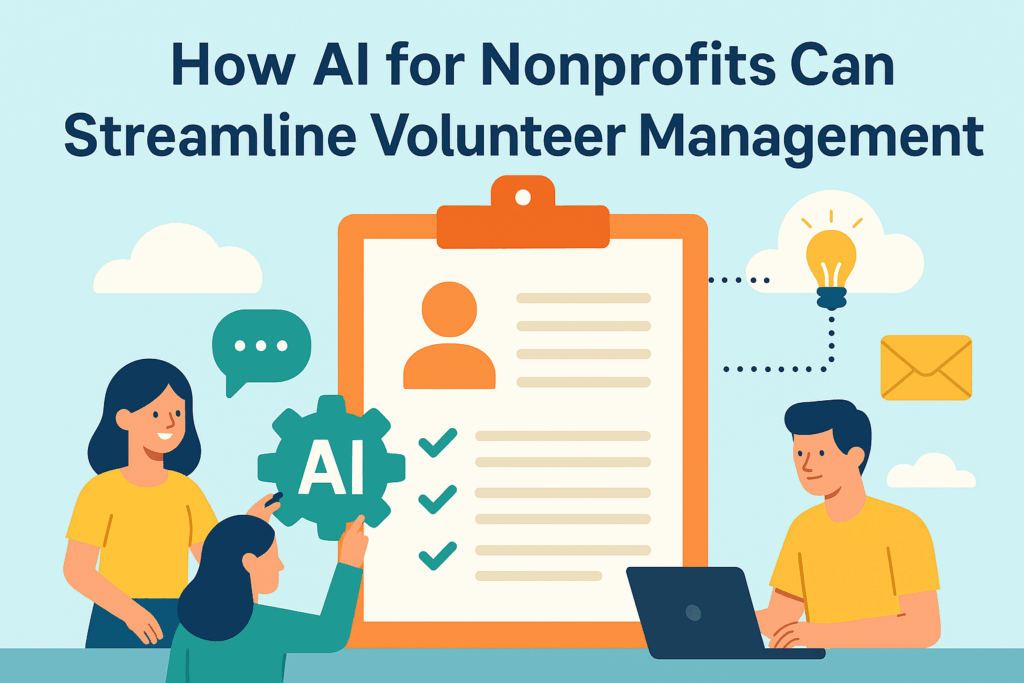
TL;DR: AI for nonprofits is transforming volunteer management by automating scheduling, matching skills to roles, predicting retention risks, and streamlining communication. These tools save coordinators hours of manual work each week. This guide explores how AI addresses the volunteer management challenge with practical tools, implementation steps, and real-world results.
Volunteer programs are the backbone of most nonprofit organizations, yet managing them efficiently is often one of the most overwhelming tasks. Scheduling shifts, training volunteers, tracking hours, and keeping engagement high requires time and resources that many nonprofits simply don’t have. AI for nonprofits is emerging as a powerful tool to change this reality. The difference between traditional volunteer management methods and those enhanced by AI lies in the ability to automate repetitive tasks and gain deeper insights, leading to more effective volunteer management. In recent years, advancements in AI have made these solutions more accessible and effective for nonprofits. By automating repetitive tasks and providing deeper insights, nonprofits can free up staff to focus on mission-driven work while giving volunteers a more seamless and rewarding experience.
At Scottship Solutions, we specialize in technology consulting for nonprofits, helping organizations implement practical, budget-conscious IT solutions that solve real problems. In this article, we’ll explore how AI for nonprofits can transform volunteer management, what tools are available, and how nonprofits can leverage AI to achieve effective volunteer management by improving volunteer recruitment, engagement, and retention, and how to adopt them responsibly.
Introduction to Artificial Intelligence
Artificial intelligence stands as a mission multiplier for nonprofits determined to amplify their impact while navigating resource constraints. At its foundation, AI empowers machines to mirror human capabilities — communication, problem-solving, and strategic decision-making — creating pathways for mission-driven organizations to thrive. By embracing these transformative tools, nonprofits can streamline time-intensive operations, unlock deeper insights from their data, and optimize workflows that truly serve their communities. This means your organization — whether operating with a lean team or managing a tight budget — can harness AI to protect precious resources, enhance stakeholder engagement, and dedicate energy to the work that drives real change. As this technology continues advancing, it opens new doors for nonprofits to tackle persistent challenges, strengthen program delivery, and create lasting impact in the communities they serve.
Why Volunteer Management Is a Pain Point for Nonprofits
Nonprofits rely heavily on volunteers, yet most organizations face at least three common challenges. Having a strong volunteer management strategy is essential to address these issues and ensure long-term success:
Scheduling inefficiencies – Volunteers often sign up last minute or cancel unexpectedly. Manual spreadsheets make it nearly impossible to adapt.
Onboarding and training gaps – Staff spend hours training new volunteers, often repeating the same information.
Low retention rates – Volunteers disengage when they don’t feel valued or when communication is inconsistent.
Volunteer recruitment difficulties – Attracting new volunteers can be challenging, especially without effective tools and strategies.
Without the right systems in place, nonprofits risk losing valuable volunteer time, frustrating staff, and ultimately reducing impact. Engaging volunteers is crucial for retention, as active involvement and recognition help strengthen their connection to the organization. Additionally, tracking engagement rates allows organizations to measure the effectiveness of their volunteer management efforts. This is where AI-driven IT support for nonprofits comes into play.
How AI Can Improve Volunteer Scheduling
One of the biggest pain points nonprofits face is scheduling. AI tools can:
Automate shift assignments by matching volunteer availability with organizational needs, and offer features such as automated shift assignments and workload balancing to improve efficiency.
Predict attendance using historical data to anticipate no-shows and send reminders.
Balance workloads so that responsibilities are distributed fairly across the volunteer pool.
AI can also use volunteer profiles to optimize scheduling by analyzing volunteer interests and matching them to specific roles, ensuring the right volunteers are assigned to the right shifts.
For example, platforms like Google Workspace and Microsoft 365 have begun incorporating AI features that recommend optimal scheduling patterns. Nonprofits working with a consulting partner like Scottship can integrate these tools into their existing systems, eliminating hours of manual scheduling every week.
Virtual Assistants for Nonprofits
Virtual assistants empower nonprofit organizations to streamline community support and mission-driven operations like never before. These intelligent, automation-powered tools—including chatbots—deliver instant, reliable responses to donor inquiries, safeguard volunteer coordination, and streamline event communications around the clock. By automating routine tasks, virtual assistants free your mission-driven team to focus on what truly matters: complex problem-solving and expanding community impact. Consider this: when a virtual assistant handles standard questions about volunteer opportunities or donation processes, your dedicated staff can redirect precious resources toward programs that transform lives and strengthen your mission. With virtual assistants as trusted partners, nonprofits can elevate the volunteer experience, amplify community support, and ensure essential services remain accessible—empowering your organization to turn technology into a powerful vessel for lasting impact.
AI-Powered Volunteer Onboarding and Training
Onboarding is another area where nonprofits lose time. Instead of hosting repetitive orientation sessions, AI tools can:
Deliver personalized training modules based on volunteer roles.
Use chatbots to answer common questions before a volunteer ever steps foot on-site.
Provide progress tracking so staff know exactly when a volunteer is ready.
AI can also collect and analyze feedback from volunteers, helping organizations continuously improve onboarding and training modules.
For instance, pairing AI-enabled LMS (Learning Management Systems) with nonprofit onboarding workflows allows organizations to create self-paced training paths. Volunteers can log in anytime, reducing scheduling bottlenecks for staff.
Scottship Solutions has helped nonprofits implement LMS platforms integrated with AI, ensuring smooth training processes that save staff hours while improving volunteer readiness.
Learn more about IT support for nonprofits. Scottship IT Support for Nonprofits
Using AI to Track Volunteer Engagement and Retention
Engagement drives retention. AI for nonprofits can analyze volunteer interactions to:
Identify volunteers at risk of disengagement by tracking missed shifts or declining activity.
Send personalized messages (like thank-you notes or event invites) automatically.
Create dashboards that visualize volunteer contributions to the mission.
These insights give nonprofit leaders data-driven ways to celebrate volunteer impact and address issues before they escalate. However, while AI can automate routine tasks, maintaining a human touch is essential for building strong relationships with volunteers and fostering genuine engagement. Retaining just 10% more volunteers can save thousands in recruitment and training costs each year.
Real-World Example: AI in Action
Imagine a local food bank with 200 active volunteers. Before adopting AI-driven tools, staff struggled with last-minute cancellations and missed communication. After implementing an AI-based scheduling and communication platform, the food bank:
Reduced scheduling errors by 40%.
Increased volunteer retention by 25% in the first year.
Freed staff to focus on fundraising and donor engagement.
By leveraging AI, the food bank unlocked a new opportunity to attract and retain volunteers, aligning its efforts with what potential volunteers are searching for.
This case demonstrates that AI for nonprofits is not just theoretical, it’s a practical solution with measurable impact.
Nonprofit Organizations and AI Adoption
Forward-thinking nonprofits are discovering how AI can transform their mission-driven work into a powerhouse of impact. By weaving AI into their operational fabric, these organizations unlock streamlined volunteer coordination, supercharge donor relationships, and amplify fundraising success beyond traditional limits. Yes, the path forward presents real challenges—tight budgets, limited tech expertise, and the critical need for responsible implementation can feel overwhelming. But here’s the truth: nonprofits who embrace AI strategically don’t just survive these hurdles, they transform them into stepping stones toward unprecedented efficiency, crystal-clear data insights, and expanded community reach. As mission-driven organizations continue pushing boundaries, thoughtful AI adoption becomes the bridge between good intentions and extraordinary impact—turning technology into a vessel that multiplies every dollar, volunteer hour, and program outcome.
How to Get Started with AI for Volunteer Management
If your nonprofit is new to AI, start small. Here are steps Scottship Solutions recommends:
Assess your current tech stack – Identify gaps in scheduling, onboarding, or communication.
Pilot a single AI tool – Start with one area, such as automated scheduling.
Integrate with existing IT systems – Ensure tools connect with CRM, donor databases, or HR software.
Train staff and volunteers – Adoption requires confidence and trust in the new system.
Measure results – Track metrics like hours saved, volunteer satisfaction, and retention.
As your nonprofit scales, a consulting partner can expand AI into other areas like donor outreach or grant writing. AI can analyze donor data to detect patterns, identify suspicious activity, and improve fundraising effectiveness. By understanding donor behavior through AI-driven analytics, nonprofits can optimize fundraising strategies, predict donation patterns, and increase donor engagement. AI tools also help nonprofits better understand and engage their donors for more targeted and successful campaigns.
Best Practices for AI Adoption
For nonprofit organizations ready to navigate the transformative power of AI tools, following mission-aligned best practices will empower your success. Begin by pinpointing your organization’s specific mission needs and impact goals, then strategically select AI solutions that directly amplify those objectives. Equipping your team with comprehensive training and ongoing support ensures everyone feels confident and empowered to harness these powerful technologies for maximum mission impact. Prioritizing responsible AI practices is non-negotiable—this means selecting transparent, fair solutions that safeguard donor data and respect volunteer privacy with the same rigor you’d expect from enterprise-level security. Continuously monitoring and evaluating your AI tools’ effectiveness allows your organization to make data-driven adjustments and optimize mission outcomes. By embracing AI as a trusted navigator for your nonprofit’s journey, you’ll unlock unprecedented opportunities to streamline operations, multiply impact, and advance social good while protecting what matters most to your stakeholders.
Responsible AI Use in Nonprofits
While AI opens new possibilities, nonprofits must adopt it responsibly. Important considerations include:
Data privacy – Volunteer contact info and schedules must be protected.
Bias in algorithms – Ensure AI recommendations don’t unfairly favor certain volunteers.
Transparency – Volunteers should know how their data is used.
Scottship Solutions prioritizes ethical technology consulting, helping nonprofits balance innovation with compliance and trust.
The Future of Volunteer Management
The future of volunteer management becomes a powerful mission multiplier when nonprofits harness AI tools that streamline operations and empower deeper volunteer engagement. Smart analytics tools help mission-driven organizations navigate volunteer participation patterns, uncover meaningful insights, and make confident, data-backed decisions that strengthen volunteer programs and amplify impact. Automated scheduling, seamless hour tracking, and intelligent reminders eliminate the overwhelming burden of workforce coordination, freeing your team to focus on what truly matters — advancing your mission and serving your community. By embracing these AI capabilities, nonprofits create personalized, rewarding volunteer experiences that foster genuine satisfaction and lasting commitment. As AI continues to evolve as your trusted digital navigator, staying informed about emerging tools and trends will be essential for nonprofits determined to maximize their community impact and remain at the forefront of mission-driven innovation.
The Scottship Advantage
Scottship Solutions is more than an MSP, we act as your strategic technology consulting partner. By focusing specifically on nonprofits, we understand your challenges around budget, staffing, and mission alignment. Our services include:
IT Support for Nonprofits – Reliable, proactive support that keeps your systems running.
Technology Consulting for Nonprofits – Strategic guidance to maximize ROI.
AI for Nonprofits – Custom workflows that unlock efficiency and growth.
If your nonprofit is ready to transform volunteer management, Scottship can help design and implement AI-driven solutions tailored to your needs.
Making Volunteer Management Easier with AI
Managing volunteers doesn’t have to be overwhelming. By embracing AI for nonprofits, organizations can streamline scheduling, improve onboarding, boost retention, and free up staff to focus on what matters most: advancing the mission.
Partnering with Scottship Solutions ensures your nonprofit gets the right tools, expert guidance, and ongoing IT support for sustainable success.
Frequently Asked Questions
How can AI improve volunteer scheduling and coordination?
AI analyzes volunteer availability, skills, location, and preferences to match the right people to the right shifts automatically. Instead of manually juggling spreadsheets and sending dozens of emails, a smart scheduling system can fill open slots, send reminders, and adjust assignments when someone cancels. Organizations using AI-powered scheduling report 30 to 40 percent fewer no-shows because volunteers get matched to roles that fit their actual availability and interests.
What AI tools are available for nonprofit volunteer management?
Several platforms now integrate AI features into volunteer management. Galaxy Digital and VolunteerHub use matching algorithms to connect volunteers with opportunities. General AI assistants like Claude and ChatGPT can help draft volunteer communications, create training materials, and analyze engagement data. Chatbots built on these platforms can handle common volunteer questions 24/7. Start with the tools you already have and add specialized platforms only after identifying specific gaps.
Is AI volunteer management affordable for small nonprofits?
Yes. You do not need an enterprise platform to benefit from AI in volunteer management. Free tools like ChatGPT and Claude can draft volunteer outreach emails, create onboarding documents, and help analyze retention data. Google Forms combined with a basic AI assistant can automate intake and matching for small programs. Dedicated volunteer management platforms with AI features typically run $50 to $200 per month, which many small nonprofits can justify if they coordinate more than 50 active volunteers.
How do I get volunteers comfortable with AI-powered systems?
Transparency is everything. Tell volunteers exactly what AI does in your system and what it does not do. If a chatbot handles initial inquiries, make it clear they are talking to an automated system and offer a path to a human. When AI matches volunteers to opportunities, let them see why they were matched and give them the option to choose differently. Most resistance comes from feeling surveilled or replaced. Show volunteers that AI handles logistics so your coordinators have more time for personal connection.
What data do I need to start using AI for volunteer management?
Start with what you have. At minimum, you need volunteer contact information, availability, and basic skills or interests. If you have historical data on volunteer hours, retention rates, and role assignments, AI can identify patterns and predict which volunteers are likely to disengage. Clean your existing data before feeding it to any AI system. Remove duplicates, update outdated records, and standardize how you categorize skills and availability. Better input data means dramatically better AI output.