
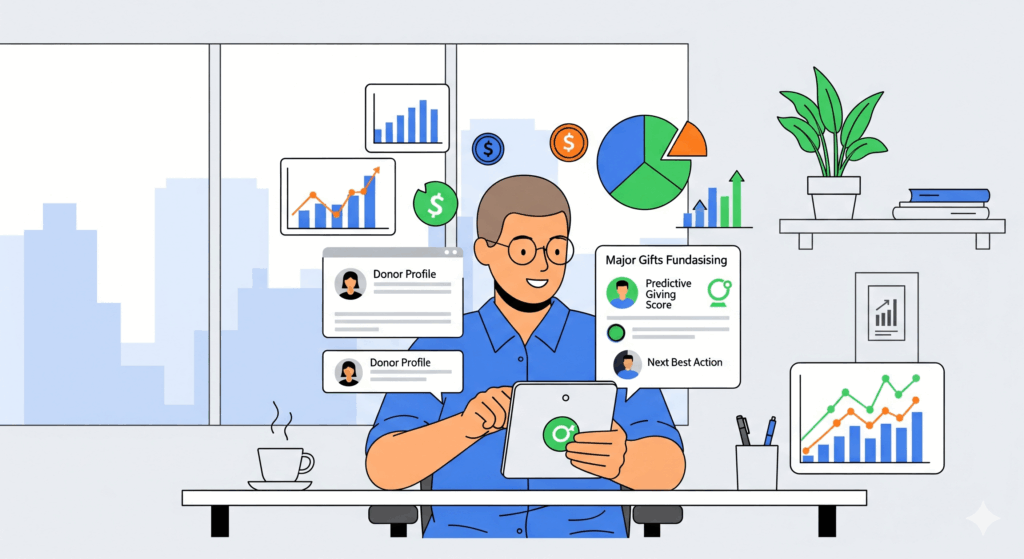
Major gifts fundraising is the backbone of financial stability and transformative growth for many nonprofits. Securing large donations from a select group of committed individuals can provide the funding for ambitious capital campaigns, new programs, and sustainable, long-term impact. The largest donations often form a substantial portion of a nonprofit’s fundraising revenue, making them a key focus in major gifts fundraising. When an organization receives these significant gifts, it can dramatically expand its capacity to deliver on its mission and run impactful initiatives. However, the traditional process, relying on manual research and one-to-one relationship building, can be time-consuming and inefficient. It is crucial to identify potential major donors early in the process to ensure the best prospects are targeted and cultivated effectively.
Enter AI and automation. By leveraging modern technology, nonprofits can streamline the entire major gifts fundraising lifecycle, from prospect identification to donor stewardship. This guide will walk you through how to modernize your major gifts strategy with the power of automation and artificial intelligence, freeing up your team to focus on what matters most: building meaningful relationships. Major gifts matter because they are often the largest and most impactful contributions, and major gifts are important for ensuring nonprofit sustainability and growth. To maximize fundraising outcomes, it is essential to implement a dedicated major gifts strategy tailored to your organization’s unique needs.
What is Major Gifts Fundraising?
Major gifts fundraising focuses on securing significant contributions from high-value donors. While the exact threshold for a “major gift” varies by organization – it could be $1,000 for a small nonprofit or $10,000+ for a larger one – the principle is the same. There are different types of major gifts, including cash, stocks, real estate, and other non-cash assets. What constitutes a major contribution depends on the organization’s size, goals, and fundraising strategy. These donations are distinct from mass-market appeals because they are based on a personalized, relationship-driven process. The goal is to build long-term partnerships with donors who are passionate about your mission and have the capacity and inclination to make a substantial impact.
A successful major gifts strategy follows a core cycle, often referred to as the major gift fundraising cycle, which provides a structured process for securing and maintaining major donations:
- Identification: Identify donors, identify prospects, and identify potential major donors by researching and selecting individuals who have the capacity and affinity to give large gifts.
- Cultivation: Building a personal relationship with the prospect.
- Solicitation: Making the official ask for a major gift.
- Stewardship: Thanking the donor and keeping them engaged and informed about their impact.
The research and cultivation stages are crucial for understanding donor capacity, building strong relationships, and preparing for successful solicitation efforts.
Building long-term partnerships requires identifying and cultivating major donor prospects, potential major donors, prospective major donors, and major giving prospects to ensure a sustainable pipeline of support. Major giving and a dedicated major giving program are strategic approaches that help nonprofits secure large gifts and foster ongoing donor engagement.
How AI and Automation Supercharge Your Major Gift Prospects Strategy
Traditional major gifts fundraising can be a slow, manual process. Prospect research, data entry, and personalized communication all require significant time and resources. This is where AI and automation become major advantages for nonprofit organizations.
1. AI-Driven Prospect Identification & Research
This is arguably the most impactful application of AI in major gifts. Instead of manually sifting through your database, AI tools can analyze vast amounts of data – both from your CRM and external sources – to identify your most promising prospects. A comprehensive donor database is essential for effective prospect research, as it allows AI to access and analyze all relevant donor information efficiently. AI tools work best when collaborating with your prospect research team, combining advanced analytics with human expertise to identify and prioritize potential major donors.
- Predictive Analytics: AI models can analyze historical giving trends, engagement history, and demographic data to predict who is most likely to give a major gift in the near future.
- Wealth Screening: AI-powered software can quickly screen your donor list to identify individuals with the financial capacity to give a significant amount. This moves beyond simple giving history to include real estate holdings, political contributions, and other wealth markers.
- Automated Scoring: Prospects can be automatically scored based on their affinity for your cause and their capacity to give, allowing your team to prioritize outreach and build a more efficient pipeline.
By automating prospect research, your major gifts officer can stop spending hours on spreadsheets and start spending more time in conversation with potential donors. AI can also help plan and enhance fundraising events by identifying and engaging major gift prospects, making these events more strategic and impactful. Technology enables nonprofits to pursue major gifts more proactively, ensuring that large donation opportunities are not missed.
2. Streamlined Cultivation and Communication
Building relationships is a human-centric activity, but automation can handle the routine, repetitive tasks that bog down your team. Automation also supports your major gift program by ensuring consistent and timely communication with prospects and donors.
- Personalized Outreach: Generative AI can create personalized email templates, thank-you notes, and other communications tailored to a donor’s specific interests and giving history. Your team can review and edit these drafts, ensuring the message is authentic while saving significant time.
- Automated Workflows: Set up automated reminders and tasks in your CRM to ensure consistent follow-up. For example, a workflow can automatically remind your major gifts officer to schedule a check-in call three months after a donor’s last gift or to send a personalized update on a project they funded. Major gift fundraising tools, such as specialized software, can further streamline these processes and help increase revenue.
- Chatbots: An AI-powered chatbot on your website can answer frequently asked questions, collect contact information, and even guide donors to specific giving opportunities, providing 24/7 support and freeing up staff time. Technology can also help promote and manage matching gifts, making it easier for donors to double their impact and for your organization to track these opportunities.
By integrating AI and automation, your organization can enhance donor engagement, support your fundraising efforts, and ensure that your strategies are aligned with your overall fundraising goals.
The Role of an IT Partner in Your Major Gifts Officer’s Success
Successfully implementing AI and automation for major gifts fundraising isn’t just about buying new software. It requires strategic planning, seamless integration, and robust IT security. This is where a specialized IT partner like Scottship Solutions can be invaluable.
- Strategic Planning: We help you assess your current processes and identify the best opportunities to leverage technology for maximum impact. Gaining buy-in from your leadership team is essential to ensure successful technology adoption and alignment with your fundraising goals. Board members also play a crucial role in supporting major gifts fundraising initiatives, from championing new strategies to participating in donor engagement.
- Data Security: Protecting sensitive donor data is non-negotiable. We ensure your systems are secure and compliant, giving you and your donors peace of mind.
- CRM Integration: We can help you integrate new AI tools with your existing constituent relationship management (CRM) system, ensuring all your data is unified and accessible. For an established organization, integration needs may be more complex due to larger data sets and multiple systems. Technology also empowers your major gift team by providing them with the tools needed for effective prospect identification, relationship management, and stewardship.
- Custom Automation: From building custom workflows to setting up automated reports, we tailor solutions to your unique needs, helping you create a more efficient and effective fundraising process.
By partnering with an IT expert, you can ensure your technology investments are strategic, secure, and truly empowering your mission.
Building Relationships with Major Donors
Strong major gift programs start with one clear foundation: authentic relationships that empower donors to become true mission partners. Every successful major gifts strategy depends on more than prospect identification – it requires deliberate, personalized engagement that makes each supporter feel valued and connected to your cause. This relationship-building process begins with focused one-on-one conversations, where major gifts officers take time to understand each donor’s vision, values, and motivations for giving.
Strategic engagement opportunities – private facility tours, intimate mission-focused dinners, or exclusive program experiences – create meaningful connections and demonstrate real impact. Personalized communication through tailored mission updates, handwritten appreciation notes, and thoughtful relationship check-ins reinforces each donor’s vital role in advancing your work.
When nonprofits prioritize authentic donor partnerships and deliver exceptional stewardship, they secure consistent major gifts, strengthen fundraising outcomes, and build a loyal community committed to mission success. Every dollar invested in these relationships generates lasting returns – not just in immediate major gifts, but in program sustainability and organizational growth that amplifies your impact.
Crafting the Ask: Soliciting Major Gifts
Securing transformational gifts is both strategic navigation and empowering partnership, demanding thorough preparation and deep insight into your mission champions. Before charting your course toward the ask, development leaders should harness prospect intelligence to assess each potential partner’s capacity, passion points, and philanthropic journey. This groundwork helps identify your strongest mission allies and empowers you to craft a personalized, compelling invitation that resonates with their values and vision for change.
A successful major gift conversation is precise and transformational, clearly demonstrating how their substantial investment will drive measurable impact. Development professionals should navigate any questions with transparency and confidence, building authentic trust that strengthens the partnership. By tailoring each invitation to the individual champion and showcasing the tangible outcomes of their potential investment, organizations can unlock larger commitments and accelerate mission-driven success.
Ultimately, a well-navigated ask becomes the cornerstone of your transformational giving strategy, helping organizations secure game-changing investments, deepen mission partnerships, and empower sustainable change that amplifies impact.
Major Donor Stewardship and Recognition
Empowering major donor stewardship and recognition stands as the cornerstone of any mission-driven major gifts strategy. Once a transformational gift arrives, your stewardship journey truly begins – strategic, ongoing cultivation ensures that major donors feel genuinely valued, stay connected to your impact, and remain inspired to amplify their mission support. A comprehensive donor stewardship framework should deliver regular, personalized impact communications, provide exclusive engagement opportunities, and create meaningful pathways for deeper mission alignment.
Recognition becomes your powerful catalyst for sustained partnership. Whether through strategic naming opportunities, prominent donor recognition displays, or featured impact stories in annual communications, acknowledging major donors publicly reinforces their vital connection to your mission and inspires additional transformational giving. Your major gifts team must champion this effort, ensuring every major donor receives thoughtful, individualized recognition and empowering stewardship that speaks directly to their philanthropic vision.
Through prioritizing strategic major donor stewardship, nonprofits build lasting partnerships, strengthen donor loyalty, and secure more transformational gifts that multiply mission impact. This unwavering commitment to donor stewardship not only amplifies fundraising success but also strengthens your organization’s reputation as a trusted steward and attracts new major donors who seek mission-aligned partnership opportunities.
FAQ: Major Gifts Fundraising & Technology
How much of a nonprofit’s revenue comes from major gifts? A: While it varies, it is estimated that the majority of a nonprofit’s individual donation revenue (sometimes as much as 80%) comes from the top 20% of its donors. Major donation, major donations, and substantial donations play a critical role in driving nonprofit revenue, making a focused major gifts program crucial for an organization’s financial health.
What’s the biggest benefit of using AI for major gifts fundraising? A: The most significant benefit is efficiency. AI automates time-consuming tasks like prospect research and data analysis, allowing your fundraising team to focus their energy on high-value, human-to-human interactions and relationship building – the core of a successful major gifts program.
Can a small nonprofit use AI for major gifts? A: Absolutely. While large organizations may have dedicated major gift officers and advanced software, many AI tools are scalable and affordable for smaller nonprofits. The core principle – using technology to work smarter, not harder – applies to organizations of all sizes.
Is using AI for fundraising an ethical concern? A: It can be. The key to ethical AI use is to maintain human oversight. AI should be a tool that enhances a fundraiser’s ability to connect with donors, not a replacement for that connection. Always review AI-generated content for accuracy and authenticity, and ensure your data security practices are transparent and robust.
What are the best practices for a major gifts fundraising strategy? A: Best practices include:
- Defining a clear major gift threshold for your organization.
- Hiring or assigning a dedicated team member to manage the program.
- Implementing a structured donor identification and cultivation process.
- Making the ask in a personalized, face-to-face setting whenever possible.
- Focusing on long-term stewardship to retain donors and build lasting relationships.
Integrating major gifts into your broader charitable giving and charitable campaigns strategy is essential for maximizing impact and donor engagement.
What are the tax benefits of making a major gift? A: Donating appreciated assets such as stocks and mutual funds can provide significant tax advantages. Donors may receive an income tax deduction for the current value of their gift and can avoid having to pay capital gains tax on the appreciation. Qualified charitable distributions (QCDs) from IRAs are another way to make tax free gifts, allowing donors to satisfy required minimum distributions while excluding the donation from taxable income. These strategies help maximize the impact of your gift while minimizing your tax liability.
What giving vehicles are available for major gifts? A: Donor advised funds (DAFs) are a popular charitable giving tool for major gifts. DAFs allow donors to contribute assets, receive an immediate tax deduction, and then recommend grants to nonprofits over time. Their flexible structure, tax benefits, and ease of administration make them an effective strategy for major gifts fundraising.
How do nonprofits identify and engage high-capacity donors? A: Nonprofits often look for wealthy donors by analyzing giving history, wealth indicators, and political giving records. Political giving, especially large contributions, can signal a donor’s capacity for major charitable support. Building relationships and tailoring engagement strategies are key to securing support from these high-capacity donors.