
TL;DR: The best nonprofit automation solutions for 2026 eliminate repetitive tasks in fundraising, donor management, email marketing, and reporting so teams can focus on mission delivery. Tools like Zapier, HubSpot, and Bloomerang lead the field. This guide ranks the 10 best nonprofit automation solutions by features, pricing, and ease of adoption.
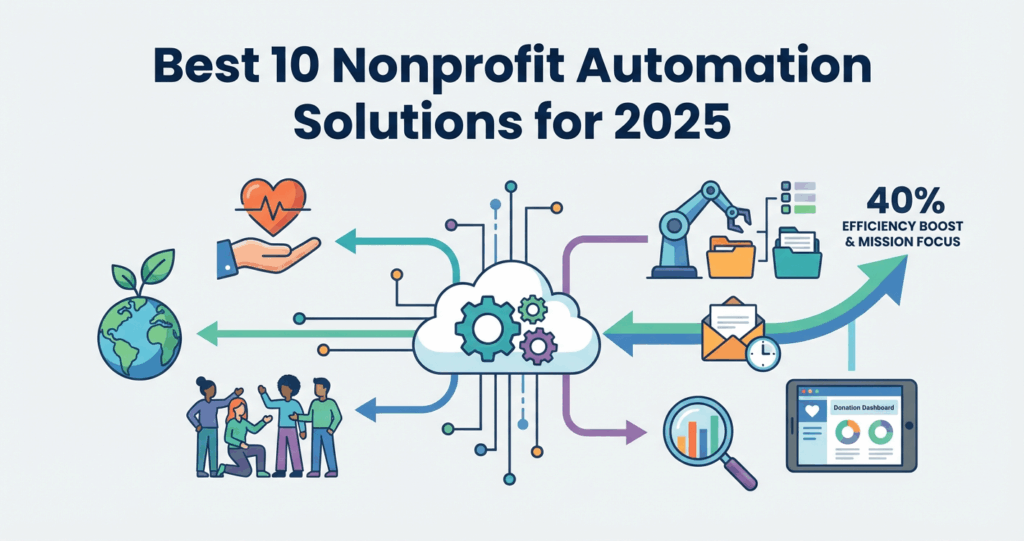
Are you overwhelmed by the administrative burdens of running a nonprofit? In 2025, organizations that embrace automation are seeing up to a 40% increase in efficiency, allowing them to focus more on their mission. This article will unveil the top 10 nonprofit automation solutions that can transform your operations, streamline processes, and maximize your impact.
- Introduction: Why Nonprofit Automation Matters in 2025
- 1. Bloomerang Fundraising: The All-in-One Donor Management Solution
- 2. Bonterra EveryAction: AI-Powered Relationship Tracking
- 3. CharityEngine: Complete Nonprofit CRM Automation
- 4. Blackbaud Raiser's Edge NXT: Enterprise-Level Donor Management
- 5. Neon CRM: Affordable Automation for Small Nonprofits
- 6. Salesforce Nonprofit Cloud: Customizable Automation at Scale
- 7. Donorbox: Streamlined Fundraising Automation
- 8. Zeffy: Modern Fundraising Platform
- 9. Mailchimp: Email Automation and Segmentation
- 10. Zapier: Workflow Automation Across Your Tech Stack
- Comparison: Choosing the Right Automation Solution
- Implementing Nonprofit Automation: Best Practices
- Sources & References
Introduction: Why Nonprofit Automation Matters in 2025
In 2025, the landscape for nonprofits is shifting rapidly, making automation essential. Organizations face increasing demands for efficiency and transparency, and automation can alleviate these pressures. By streamlining administrative tasks, nonprofits can focus on their core missions, ultimately enhancing their impact.
Research indicates that nearly seventy percent of nonprofits believe automation improves their operational efficiency, allowing for better resource allocation (Tech Impact). With the right tools, organizations can manage donor relationships, track funding, and streamline communication. Embracing automation not only saves time but also fosters innovation, enabling nonprofits to adapt to changing environments. As the sector evolves, those who automate will likely lead the way forward.
The Role of Automation in Nonprofit Operations
Automation plays a crucial role in nonprofit operations by minimizing repetitive tasks, enhancing data accuracy, and improving fundraising efforts. These efficiencies allow organizations to allocate more resources toward fulfilling their missions effectively.
1. Bloomerang Fundraising: The All-in-One Donor Management Solution
Bloomerang Fundraising offers a comprehensive donor management solution that streamlines various aspects of nonprofit operations. One standout feature is its engagement tracking, which monitors donor interactions across all touchpoints. This capability allows organizations to understand donor behavior better and tailor their outreach accordingly.
Additionally, automated reporting provides insights into fundraising performance and donor metrics, helping teams make informed decisions quickly. The platform also supports donor segmentation, enabling targeted outreach campaigns that resonate with specific donor groups.
Field fundraisers and development staff benefit from mobile access, making it easier to engage donors on the go. Furthermore, Bloomerang integrates seamlessly with email platforms like Mailchimp, enhancing communication strategies. With these features, nonprofits can optimize their fundraising efforts, ultimately increasing their impact and efficiency in a competitive environment (Tech Impact).
Key Features and Capabilities
Leading nonprofit automation solutions for 2025 offer a range of features designed to enhance efficiency. Key capabilities include donor management systems that streamline fundraising efforts, integrated communication tools for better engagement, and data analytics for informed decision-making. Additionally, automated reporting simplifies compliance and transparency, while task management features help teams prioritize their work. These tools empower nonprofits to maximize their impact and adapt to evolving challenges in the sector.
2. Bonterra EveryAction: AI-Powered Relationship Tracking
Bonterra EveryAction stands out as a powerful solution for nonprofits looking to enhance their relationship tracking through AI-driven insights. This platform simplifies donor management, allowing organizations to build comprehensive profiles that include engagement history, preferences, and giving patterns. By leveraging advanced analytics, EveryAction helps nonprofits tailor their outreach efforts, ensuring that communications resonate with supporters.
The AI capabilities enable predictive modeling, assisting organizations in identifying potential major donors or re-engaging lapsed supporters. This data-driven approach not only boosts fundraising efforts but also strengthens community bonds. For example, organizations can automate personalized emails based on donor activity, significantly improving response rates.
Moreover, EveryAction integrates seamlessly with various tools, facilitating a streamlined workflow. Nonprofits can manage events, track volunteer participation, and analyze campaign effectiveness all in one place. With nearly seventy percent of nonprofits reporting that automation enhances operational efficiency, adopting such technology is becoming increasingly vital (Tech Impact). By utilizing Bonterra EveryAction, organizations can focus on their mission, confident that their relationships with supporters are managed effectively and efficiently.
Advanced Automation and Scalability
Advanced automation solutions empower nonprofits to scale effectively while maintaining mission focus. By integrating platforms that automate donor management, data entry, and reporting, organizations can handle increased workloads without adding staff. These systems facilitate real-time analytics, enabling quick decision-making and strategic planning. Additionally, automation reduces human error, ensuring accurate data management. As nonprofits grow, leveraging these technologies becomes essential for sustaining operations and enhancing engagement with donors and stakeholders alike.
3. CharityEngine: Complete Nonprofit CRM Automation
CharityEngine offers a comprehensive suite of automation tools specifically tailored for nonprofits, making it an excellent choice for organizations looking to enhance their operational efficiency. One standout feature is SustainerIQ, which utilizes AI to manage recurring gifts, automating communications and payment updates. This functionality allows nonprofits to focus on building relationships rather than managing transactions.
Additionally, the platform’s Prospect insights feature employs machine learning to pinpoint donors with high giving potential, streamlining fundraising efforts. The Direct mail automation capability further personalizes outreach by segmenting data for targeted campaigns.
For organizations focused on annual contributions, CharityEngine provides dedicated workflows through its Annual fund management tool, ensuring systematic tracking of annual giving programs. Lastly, the Major Giving Work Center enhances major donor stewardship with effective moves management. These features collectively empower nonprofits to optimize their operations and maximize their impact (Tech Impact).
Integrated Workflows and AI-Powered Features
Integrated workflows and AI-powered features enhance nonprofit operations by automating repetitive tasks and improving data management. These technologies enable seamless communication between systems, ensuring that information flows smoothly. As a result, nonprofits can allocate resources more effectively, respond to donor needs promptly, and ultimately achieve greater mission impact with less effort.
4. Blackbaud Raiser's Edge NXT: Enterprise-Level Donor Management
Blackbaud Raiser’s Edge NXT stands out as a premier choice for enterprise-level donor management. It provides a comprehensive suite of tools designed to enhance fundraising efforts and improve donor relationships. One of its key features is advanced donor analytics, which employs predictive modeling to forecast fundraising outcomes. This capability allows organizations to make informed decisions based on data, ultimately boosting their fundraising effectiveness.
The platform also excels in major giving work management, streamlining moves management and donor stewardship processes. This ensures that nonprofits can efficiently track and nurture relationships with high-capacity donors. Additionally, automated workflows for annual fund management simplify the execution of giving campaigns, making it easier to engage supporters consistently.
Financial integration is another critical aspect, enabling seamless connections with accounting systems. This functionality helps maintain accurate financial records and enhances overall operational efficiency. Furthermore, the prospect insights feature identifies high-capacity donors and engagement opportunities, allowing organizations to prioritize their outreach efforts effectively.
With these powerful tools, Blackbaud Raiser’s Edge NXT empowers nonprofits to optimize their fundraising strategies and maximize their impact in the community (Tech Impact).
Predictive Analytics and Prospect Insights
Predictive analytics empowers nonprofits to anticipate donor behavior and funding trends. By leveraging data insights, organizations can tailor outreach strategies, enhance engagement efforts, and ultimately increase donations, leading to a more sustainable operational model.
5. Neon CRM: Affordable Automation for Small Nonprofits
Neon CRM offers a budget-friendly solution tailored specifically for small nonprofits, making it a strong contender in the automation space. It simplifies various operational tasks, allowing organizations to focus on their core missions without being bogged down by administrative burdens.
Key features include fundraising event management with automated ticketing and registration, which streamlines the entire process from start to finish. This can significantly reduce the time spent on manual entry and help organizations engage more effectively with their supporters. Additionally, the platform excels in donor management, providing tools for engagement tracking and segmentation to better understand donor behavior.
Volunteer coordination is another crucial area where Neon CRM shines, offering scheduling automation that simplifies the process of managing volunteers. This feature ensures that nonprofits can efficiently allocate their human resources where they’re needed most. Integrated reporting across all operational areas further enhances decision-making by providing valuable insights in one place. Lastly, the email marketing integration allows for seamless campaign automation, enabling organizations to communicate with their audience effortlessly.
With these capabilities, Neon CRM proves to be an invaluable tool for small nonprofits looking to enhance their efficiency and impact (Tech Impact).
Streamlined Features and Cost-Effective Pricing
Many nonprofit automation solutions offer streamlined features that simplify operations. Look for tools that integrate donor management, communication, and reporting into a single platform. Cost-effective pricing models are also essential; many solutions provide tiered pricing based on organizational size or usage levels. This flexibility allows nonprofits to select the features they need without overspending, ensuring they can maximize resources while maintaining effective operations. Investing wisely in automation can lead to significant long-term savings.
6. Salesforce Nonprofit Cloud: Customizable Automation at Scale
Salesforce Nonprofit Cloud offers a powerful suite of automation features designed specifically for nonprofit organizations. One standout component is the Nonprofit Success Pack (NPSP), which provides pre-built data models for donor management, accounts, and relationships. This foundation allows organizations to tailor their workflows to fit unique operational needs through highly customizable workflows.
The platform also supports extensive API access for custom integrations and automation, making it easier to connect with other tools. Additionally, nonprofits can leverage donor journey mapping to track automated touchpoints, ensuring consistent communication with supporters. With advanced reporting and dashboards, organizations can make data-driven decisions, enhancing overall impact and efficiency.
In fact, research shows that nearly seventy percent of nonprofits believe automation improves their operational efficiency, allowing for better resource allocation (Tech Impact).
NPSP and Third-Party Integrations
NPSP integrates seamlessly with various third-party applications, enhancing its functionality. Popular integrations include payment processors, email marketing tools, and reporting platforms. This flexibility allows nonprofits to customize their tech stack for improved efficiency and streamlined workflows.
7. Donorbox: Streamlined Fundraising Automation
Donorbox stands out as a powerful tool for nonprofits looking to streamline their fundraising efforts. With its user-friendly interface, organizations can easily create customizable donation forms that include automated thank-you sequences. This feature not only enhances donor engagement but also saves time, allowing staff to focus on other critical tasks.
The platform excels in managing recurring donations, offering automated billing and communications that ensure donors remain informed and appreciated. This is crucial for maintaining long-term relationships with supporters who prefer consistent giving. Additionally, campaign-specific tracking enables nonprofits to monitor the success of targeted fundraising initiatives, providing insights that help refine future strategies.
Donor segmentation is another key feature, allowing organizations to tailor outreach to different donor groups. Personalized communication fosters a deeper connection, which can lead to increased donations. Furthermore, integration with email platforms facilitates automated follow-up campaigns, ensuring that no potential donor is overlooked.
Nonprofits that adopt automation tools like Donorbox are likely to see a significant boost in efficiency. Research shows that nearly seventy percent of nonprofits believe automation improves their operational efficiency, allowing for better resource allocation (Tech Impact). By leveraging these capabilities, organizations can not only streamline their fundraising processes but also enhance their overall impact in the communities they serve.
Donation Forms and Campaign Management
Effective donation forms and campaign management are vital for maximizing fundraising efforts. Automation solutions simplify the process, enabling nonprofits to create customized donation forms that align with their branding and mission. These tools can manage multiple campaigns simultaneously, track donor engagement, and analyze giving patterns. By automating acknowledgments and follow-ups, organizations can enhance donor relationships and retention. Features like recurring donation options and social sharing capabilities increase visibility and encourage contributions. Ultimately, streamlined donation processes help nonprofits focus on their mission while boosting fundraising efficiency and effectiveness.
8. Zeffy: Modern Fundraising Platform
This modern fundraising platform offers a suite of tools tailored for nonprofits aiming to enhance their fundraising efforts. Key features include online giving forms with automated donor communications, ensuring a seamless donation experience. Event registration and ticketing are simplified with automated confirmations, reducing administrative burden.
Additionally, the platform supports peer-to-peer fundraising campaign management, empowering supporters to raise funds on behalf of the organization. Its donor database features automated engagement tracking, helping organizations maintain meaningful connections. Email automation for campaign sequences further streamlines outreach efforts, making it easier to engage donors consistently. This comprehensive approach can significantly boost fundraising efficiency and donor satisfaction (Tech Impact).
User-Friendly Automation Tools
User-friendly automation tools empower nonprofits to streamline operations without technical hurdles. These solutions often feature intuitive interfaces and customizable workflows, making it easy for teams to automate tasks like donor management, communication, and reporting, enhancing overall productivity and engagement.
9. Mailchimp: Email Automation and Segmentation
Email automation and segmentation can transform how nonprofits engage with their donors. With features like email segmentation based on donor behavior and characteristics, organizations can tailor their communications for maximum impact. This ensures that messages resonate with the right audience, increasing engagement rates.
Additionally, behavioral triggers automatically send messages based on donor actions, enhancing the personalization of communication. Automated welcome sequences for new donors create a warm introduction, fostering a positive first impression. Moreover, campaign analytics track open rates, click-through rates, and conversions, providing valuable insights into performance. Integration with Bloomerang and other CRM platforms allows for seamless data management, improving overall efficiency and donor relationship management (Tech Impact).
Automated Campaigns and Analytics
Automated campaigns enable nonprofits to engage supporters seamlessly, using targeted messaging based on donor behavior and preferences. Analytics tools track campaign performance in real-time, providing insights into engagement metrics and conversion rates. This data-driven approach helps organizations refine strategies, optimize resource allocation, and ultimately drive higher fundraising success and community impact.
10. Zapier: Workflow Automation Across Your Tech Stack
Integrating multiple software platforms is essential for nonprofits aiming to streamline operations. Zapier excels at workflow automation, connecting tools like CRMs, email platforms, and project management software. This integration reduces manual data entry and enhances efficiency.
Key features include the ability to create tables that trigger automated workflows and build custom interfaces for donor portals and dashboards. Flexible pricing starts with a free plan, making it accessible to organizations of all sizes.
To effectively implement automation, nonprofits should:
Audit current processes.
Define success metrics.
Prioritize high-impact automation.
Plan data migration.
Establish governance.
Assess current pain points.
Define organizational priorities.
Establish budget parameters.
Test solutions.
Consult implementation partners.
No-Code Integration and Custom Workflows
No-code integration tools enable nonprofits to automate workflows without needing extensive technical skills. These platforms allow users to connect various applications, streamline data transfer, and create custom processes. This flexibility not only saves time but also reduces errors, empowering teams to focus on mission-driven tasks. Automation can boost overall productivity significantly (Tech Impact).
Comparison: Choosing the Right Automation Solution
Choosing the right automation solution requires careful consideration of your organization’s specific needs. Start by evaluating your current processes. Identify repetitive tasks that consume time and resources. Solutions that integrate seamlessly with existing tools are often more effective, reducing the learning curve for staff.
Next, consider scalability. As nonprofits grow, their needs evolve. An automation tool should adapt to these changes without requiring a complete overhaul. Look for features that cater to donor management, reporting, and communication.
Cost is another critical factor. While some tools may have higher upfront costs, their long-term benefits can outweigh initial investments. Research shows that organizations leveraging automation experience a 45% increase in productivity (Community IT Innovators).
Finally, prioritize user support and community resources. A responsive support team can make a significant difference in troubleshooting and maximizing the tool’s potential, ensuring your nonprofit can thrive in a rapidly changing environment.
Pricing and Scalability Considerations
Pricing varies widely among nonprofit automation solutions, often influenced by features, user counts, and scalability options. Organizations should evaluate both upfront costs and long-term investments to ensure sustainability and growth.
Feature Matching by Organization Size
Choosing the right automation solution depends heavily on an organization’s size. Smaller nonprofits may benefit from user-friendly, cost-effective tools that simplify basic tasks, while larger organizations often require comprehensive systems that integrate multiple functions. Tailoring solutions to fit specific needs ensures maximum efficiency and effectiveness across all operation levels.
Implementing Nonprofit Automation: Best Practices
Implementing automation in nonprofit organizations requires a strategic approach to ensure success. Start by identifying repetitive tasks that consume valuable time. Common areas for automation include donor management, event registration, and reporting. Once identified, choose software that aligns with your organization’s specific needs. Look for solutions that offer user-friendly interfaces and integration capabilities with existing systems.
Training staff is crucial. Ensure that team members understand how to utilize new tools effectively. Regular training sessions can help build confidence and proficiency, minimizing resistance to change. Additionally, gather feedback from users to refine processes and improve the automation experience.
Monitoring performance is vital. Establish key performance indicators (KPIs) to assess the impact of automation on overall efficiency. Research shows that nearly seventy percent of nonprofits see improved operational efficiency through automation (Tech Impact). This data reinforces the importance of tracking outcomes to justify investments in new technologies.
Lastly, remain adaptable. As technology evolves, revisit your automation strategies to incorporate new tools and best practices. This flexibility will help sustain your organization’s growth and impact, ensuring that automation continues to serve your mission effectively.
Planning Your Automation Strategy
Identifying the right automation strategy is crucial for maximizing impact. Start by assessing your nonprofit’s specific needs, such as donor management, volunteer coordination, or event planning. Next, set clear goals to measure success, like increasing donor retention or reducing administrative time. Research available automation tools that align with these objectives and budget constraints. Engage your team in the planning process to ensure buy-in and smooth implementation. Finally, establish a timeline for rollout, allowing for testing and adjustments to optimize performance as you learn and grow.
Conclusion: Next Steps for Your Nonprofit
Automation can transform how nonprofits operate, but taking the first steps is crucial. Begin by assessing your organization’s specific needs and identifying repetitive tasks that could benefit from automation. Next, research and select the right tools that align with your mission and budget.
Consider starting with one or two solutions, such as donor management or volunteer tracking, to ease the transition. Training staff on these tools is essential for maximizing their potential. Finally, regularly review the impact of automation on your operations. A study found that 75% of nonprofits report improved efficiency through automation, highlighting its value in enhancing mission-driven work (Heller Consulting).
Evaluating and Selecting Your Solution
When evaluating automation solutions, start by identifying your nonprofit’s specific needs. Consider factors like budget, scalability, and user-friendliness. It’s essential to assess how well each solution integrates with your existing systems. Look for tools that offer robust features such as donor management, reporting, and communication capabilities. Additionally, prioritize solutions with strong customer support and training resources to ensure smooth implementation. Finally, gather feedback from team members who will use the software, as their insights will help you choose the best fit for your organization.
Frequently Asked Questions
What are the benefits of automation for nonprofits in 2025?
Automation helps nonprofits improve operational efficiency by reducing repetitive tasks, enhancing data accuracy, and streamlining fundraising efforts. Research shows that nearly 70% of nonprofits believe automation significantly boosts their effectiveness and resource allocation.
How can small nonprofits afford automation tools?
Many automation solutions, like Neon CRM, offer tiered pricing models that cater to smaller organizations. Free plans and low-cost options allow nonprofits to access essential features without overspending, maximizing their budget effectiveness.
What features should nonprofits look for in automation solutions?
Nonprofits should seek tools with integrated donor management, automated communication, and robust reporting features. These capabilities simplify operations and enhance engagement, enabling organizations to focus on their mission while improving efficiency.
How can predictive analytics benefit nonprofit fundraising?
Predictive analytics allows nonprofits to forecast donor behavior and funding trends, enabling tailored outreach strategies. This data-driven approach can significantly enhance donor engagement and increase contributions, leading to greater sustainability.
What are some best practices for implementing automation in nonprofits?
To implement automation successfully, nonprofits should identify repetitive tasks, choose user-friendly tools, and train staff effectively. Establishing key performance indicators (KPIs) helps monitor the impact of automation on operational efficiency and mission fulfillment.
Sources & References
15 Best Nonprofit CRMs for 2025: Find the Best CRM for Your Nonprofit
Fundraising Automation: Comparing StratusLIVE, Virtuous, Blackbaud, and Salesforce for Nonprofits
The Best Tech for Nonprofits in 2025: A Short Guide — Nonprofit Automation Agency
Top 15 AI Tools Every Nonprofit Should Know About – 2025 Guide