
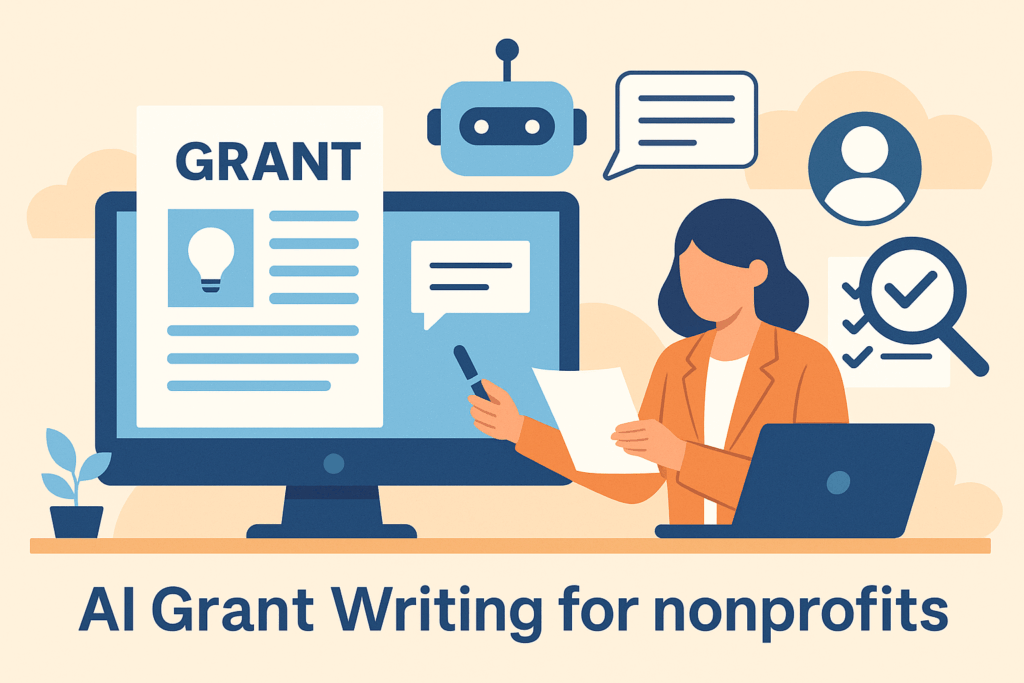
TL;DR: AI-powered grant writing can accelerate research, draft narratives, and streamline editing, but it cannot replace human storytelling or funder relationships. Current tools like ChatGPT and Instrumentl assist with specific tasks, not full proposals. Scottship Solutions helps nonprofits combine that AI efficiency with the compliance review and human judgment grant writing still requires. This guide explains what AI-powered grant writing realistically delivers today and where human expertise remains essential.
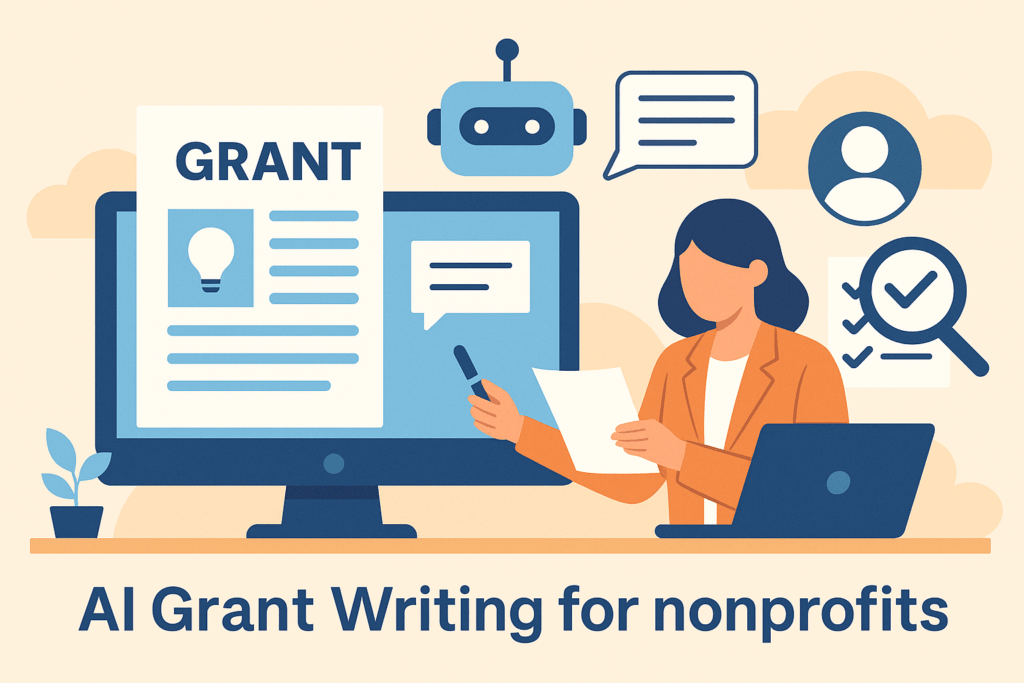
For nonprofits, grant funding is often mission-critical. Yet writing compelling grant applications is one of the most time-consuming and resource-intensive tasks teams face. With the rise of generative AI, many leaders are asking: can AI grant writing for nonprofits reduce the burden, improve win rates, and free staff to focus on relationships? The answer is both exciting and cautious, AI offers real advantages, but it isn’t a magic replacement for expertise or compliance. Today, AI-powered writing software and grant writing tools are emerging to help nonprofits identify grant opportunities and funding opportunities more efficiently.
AI can accelerate the first draft of a grant application, assist in drafting and refining grant proposals, but nonprofits must review carefully.
What can AI do for grant writing today?
AI tools like ChatGPT and specialized nonprofit platforms can handle several key tasks already, delivering immediate time savings. When used strategically, they support, but don’t replace, the human grant writer.
- Drafting initial content: AI can produce first drafts for n
In This Articleeeds statements, project descriptions, or boilerplate sections that typically require hours of staff time.
- What can AI do for grant writing today?
- What can AI not do for grant writing yet?
- What are the best practices for using AI in grant writing?
- What are real-world examples of AI grant writing for nonprofits?
- How should nonprofits handle responsible AI adoption and funder expectations?
- How Scottship Solutions helps nonprofits
- External resources to explore
- Conclusion
- Summarizing research: AI quickly distills complex reports or demographic data into digestible talking points for proposals, and can gather information efficiently to support your grant writing.
- Idea generation: Tools can brainstorm program outcomes, logic models, or budget justification language to overcome writer’s block.
- Formatting assistance: With the right prompts, AI can restructure content to fit page limits, required sections, or style guidelines.
- AI features for grant writing workflows: Modern platforms offer AI features that streamline grant writing workflows, automate repetitive tasks, and support the overall grant process by managing deadlines, tracking progress, and organizing application requirements.
- Grant prospecting support: Combined with APIs and databases, AI can filter opportunities and flag those aligned with your mission, enabling comprehensive grant research and surfacing relevant grant opportunities.
Using an AI grant writing platform can centralize these tasks for nonprofits, making grant research, writing, and management more efficient.
What can AI not do for grant writing yet?
Despite the hype, AI grant writing for nonprofits still has clear limitations. Over reliance without oversight can create more risk than reward. Keeping a human in the loop is critical for the items below, where AI can help but cannot finish the job on its own.
- Original storytelling: Funders want authentic impact narratives. AI can mimic tone but lacks the lived experience of your community, and may struggle to fully capture your organization’s voice.
- Compliance accuracy: AI doesn’t inherently know IRS rules, federal grant guidelines, or foundation-specific requirements. Human review is essential. Adhering to ethical guidelines and ethical considerations is also critical to ensure responsible and honest use of AI in grant writing.
- Data validation: Generative AI is prone to “hallucinations,” inventing statistics or citations. Every fact must be verified. Technical writing and understanding grant requirements are complex tasks that still require human expertise.
- Relationship building: Winning grants depends on cultivating trust with program officers, something AI cannot replicate.
- Strategic alignment: Choosing which grants to pursue requires judgment about mission fit, staffing, sustainability, and grant-specific needs.
What are the best practices for using AI in grant writing?
The key is treating AI as an assistant, not an author. Nonprofits should design workflows that put AI to work where it shines, drafting and summarizing, while safeguarding accuracy and voice.
- Start with templates: Feed AI your existing successful grant language so it learns your tone and mission. With minimal input, an AI assistant or grant assistant can quickly generate draft grant content to jumpstart your proposal.
- Use AI for drafts, not finals: Treat AI output as a rough starting point. Humans refine for compliance, emotion, and accuracy.
- Fact-check everything: Assign a reviewer to validate data, citations, and alignment with guidelines. Always conduct a thorough review of AI-generated grant content to ensure quality and compliance.
- Protect sensitive data: Never upload confidential donor or client information into unsecured AI tools.
- Document AI use: Keep a record of where and how AI assisted, in case funders ask about process integrity. Use specialized features and AI assistance to streamline the grant writing process and improve efficiency.
Using a writing tool with AI capabilities can also support crafting compelling narratives in your grant proposals, helping you stand out to funders.
What are real-world examples of AI grant writing for nonprofits?
Early adopters are already seeing results:
- A regional nonprofit used AI to generate project ideas and craft compelling proposals, drafting program descriptions that cut staff prep time by 40% while maintaining a 75% win rate with human review.
- A national nonprofit used AI to summarize 60-page demographic reports into proposal-ready bullet points, saving days of analysis. The AI tool also supported the creation of a strong grant narrative and a persuasive grant proposal.
- A small nonprofit used a grant proposal generator to develop professional grant proposals for their grant projects, brainstorming language around impact metrics, then cross-checked with funder guidelines before submission to secure more grants.
These AI tools help organizations create winning proposals, successful grant proposals, and compelling grant proposals, ultimately securing funding for a wide range of grant projects.
How should nonprofits handle responsible AI adoption and funder expectations?
Some foundations have started issuing guidance on AI use. They emphasize transparency and accountability, encouraging applicants to disclose if AI helped with drafting. Artificial intelligence enables a deep understanding of community needs and supports data analysis to align proposals with funder priorities. Over time, ethical frameworks will likely formalize how should be applied in grant writing.
For nonprofits, this means using AI responsibly and being prepared to explain your process. Strategic planning and the use of advanced features, such as document storage, are important for supporting responsible AI adoption. Done well, it demonstrates innovation while upholding credibility.
How Scottship Solutions helps nonprofits
At Scottship Solutions, we help nonprofits integrate AI tools into safe, productive workflows, supporting the entire grant process and managing grant related documents efficiently. Our IT support for nonprofits ensures your organization’s data is secure and enables visualizing data for large organizations and larger organizations. Our data and analysis services provide accurate metrics to back up proposals and assist with grant research to identify relevant funding opportunities.
With our consulting, you can confidently deploy a comprehensive suite of ai grant writing tools, including advanced ai models for grant research and generating grant-specific content tailored to each grant opportunity. We offer a range of subscription options (enterprise plans, premium plan, pro plan, unlimited plan, basic access, free plan, and free version), so organizations of all sizes can access the right features for their needs. We help clients secure funding with grant-specific tools and support throughout the entire grant process.
External resources to explore
- NTEN: Nonprofit Technology Guidance
- TechSoup: AI Tools and Resources for Nonprofits
- Candid: Grantwriting Tools and Training
Conclusion
AI is already helping nonprofits draft, brainstorm, and analyze grants more efficiently. But the promise of AI grant writing for nonprofits comes with limits. It cannot replace authentic storytelling, compliance expertise, or human relationships. The winning approach is hybrid, AI for speed, people for strategy. With the right balance, nonprofits can save time and still submit powerful, fundable proposals.
Ready to explore AI for your grants? Scottship Solutions can design a workflow that combines AI efficiency with compliance peace of mind.
Frequently Asked Questions
Can AI write an entire grant proposal by itself?
No. AI can draft sections, suggest language, and help structure your narrative, but it cannot replace the human judgment needed for a compelling proposal. Grant reviewers look for authentic organizational voice, specific program details, and realistic outcomes that only your team can provide. Use AI as a drafting partner: let it generate first drafts, then heavily edit with your program knowledge and community context. The organizations winning grants with AI assistance treat it as a starting point, not a finished product.
Will funders reject proposals written with AI?
Most funders have not issued formal policies on AI use in proposals, but the trend is toward transparency. A growing number of foundations ask applicants to disclose AI tool usage. The risk is not using AI itself. The risk is submitting generic, obviously AI-generated text that lacks specificity about your organization and community. If your proposal reads like it could come from any nonprofit, you have a problem whether AI wrote it or not. Personalize every section with real data and stories from your programs.
Which AI tools are best for nonprofit grant writing?
Claude and ChatGPT are the most capable general-purpose options for drafting and editing grant narratives. Claude handles longer documents well, which helps when working with complex multi-section proposals. For grant research and prospecting, tools like Instrumentl and GrantStation help identify matching opportunities. Grammarly catches language issues. The best approach is combining a strong AI writing assistant with a grant database rather than relying on any single specialized tool.
How do I make AI-assisted grant writing sound authentic?
Feed the AI your organization’s existing materials before asking it to write anything. Share your mission statement, past successful proposals, annual reports, and program descriptions. Give it specific numbers: how many people you serve, your geographic area, the exact outcomes you have measured. Then edit the output aggressively. Replace generic phrases with language your ED and program staff actually use. If a sentence could appear in any nonprofit’s proposal, rewrite it until it could only come from yours.
How much time does AI actually save on grant writing?
Most organizations report cutting first-draft time by 40 to 60 percent. A proposal section that takes 3 hours to write from scratch might take 1 hour with AI drafting and your editing. The biggest time savings come from boilerplate sections like organizational background, methodology descriptions, and budget justifications that follow predictable patterns. The sections requiring the most human input, like needs statements with local data and evaluation plans with realistic metrics, see smaller time reductions. Expect AI to save your grants team 5 to 15 hours per major proposal. Scottship Solutions helps nonprofits build these workflows so the time savings never come at the cost of compliance or accuracy.
Written by
Isabela Guimaraes
AI Consultant at Scottship Solutions
Isabela helps nonprofits and small businesses implement practical AI and automation solutions. She translates emerging AI capabilities into workflows that save time and expand mission impact.
Certifications
AWS Certified AI Practitioner • AWS Certified Cloud Practitioner • Google Cloud Generative AI Leader
Industries Served
Human Services, Healthcare & Community Health, Education & Youth Development, Child Advocacy