
TL;DR: AWS is the world’s largest cloud computing platform, with more than 200 services (compute like EC2, storage like S3, and databases like RDS) across 32 regions and pay-as-you-go pricing that can cut infrastructure costs 20 to 50 percent versus on premises hardware. This guide covers AWS services, global infrastructure, deployment models, pricing, and real examples so you can decide whether AWS fits your organization. Scottship Solutions helps nonprofits weigh cloud computing decisions like this one.
In 2024, AWS controls over 32% of the global cloud market, powering everything from Netflix’s streaming platform to NASA’s space missions. This dominance is not accidental. AWS reshaped how organizations think about computing infrastructure, turning cloud computing from an emerging technology into the backbone of modern business operations.
Cloud computing in AWS represents more than just hosting services in someone else’s data centers. It’s a comprehensive platform that enables organizations to build, deploy, and scale applications with unprecedented flexibility and efficiency. Whether you’re a startup looking to launch your first web application or an enterprise planning a complete digital transformation, understanding AWS cloud services is essential for staying competitive as more workloads move to the cloud.
This guide will walk you through everything you need to know about cloud computing with Amazon Web services, from foundational concepts to real-world implementation strategies. You’ll discover how AWS’s global infrastructure can support your business goals, explore pricing models that can significantly reduce your operational costs, and learn from companies that have successfully transformed their operations using aws cloud services.
What is Cloud Computing in AWS?
AWS (Amazon Web Services) is the world’s leading cloud computing platform launched by Amazon in March 2006. What started as an internal initiative to support Amazon’s e-commerce operations has evolved into a comprehensive cloud platform serving millions of customers across 190 countries.
Cloud
- What is Cloud Computing in AWS?
- What Cloud Computing Services Does AWS Offer?
- How Does AWS Global Infrastructure Support Cloud Computing?
- What Cloud Deployment Models Does AWS Offer?
- How Do AWS Cloud Computing Pricing Models Work?
- Benefits of Cloud Computing with AWS
- Real-World AWS Cloud Computing Use Cases
- Getting Started with AWS Cloud Computing

AWS provides over 200 fully featured services including compute, storage, databases, networking, analytics, and machine learning. This comprehensive service portfolio means organizations can build virtually any type of application or solution using aws resources, from simple websites to complex artificial intelligence systems.
Companies like Spotify, Pinterest, and General Electric use AWS to power their digital operations, demonstrating the platform’s versatility across industries. Spotify streams music to over 400 million users worldwide using AWS’s global network, while General Electric uses aws cloud services for industrial IoT applications that monitor everything from aircraft engines to power grid infrastructure.
AWS serves millions of customers from startups to Fortune 500 companies, government agencies, and non-profit organizations. This broad adoption reflects both the platform’s reliability and its ability to scale from small projects to enterprise-wide implementations seamlessly.
What Cloud Computing Services Does AWS Offer?
AWS organizes its vast service portfolio into logical categories that address different aspects of modern computing infrastructure. Understanding these service categories helps organizations identify the right tools for their specific requirements and build comprehensive cloud solutions.
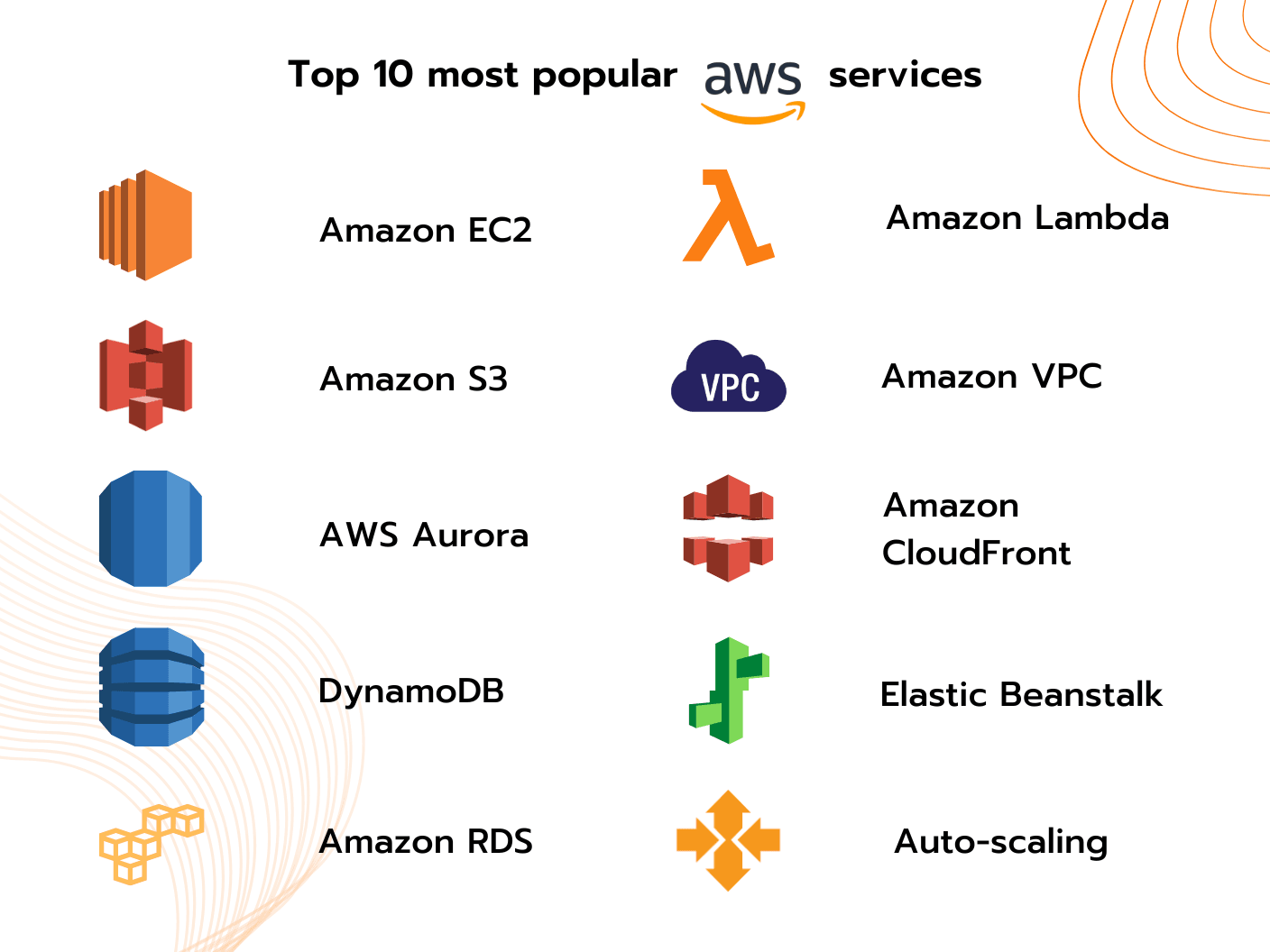
Amazon EC2 (Elastic Compute Cloud) provides resizable virtual servers in the cloud, offering computing power that can scale up or down based on demand. EC2 instances come in various configurations optimized for compute-intensive, memory-intensive, or storage-optimized workloads, giving organizations complete control over their computing environment.
Amazon S3 (Simple Storage Service) offers scalable object storage for data backup and archival, providing 99.999999999% (11 9’s) data durability. S3 serves as the foundation for many aws cloud services and supports everything from website hosting to big data analytics workflows.
Amazon RDS (Relational Database Service) manages MySQL, PostgreSQL, Oracle, and SQL Server databases, eliminating the need for database administration tasks like patching, backup, and recovery. This managed approach allows development teams to focus on application logic rather than database maintenance.
AWS Lambda enables serverless computing for running code without managing servers. With Lambda, organizations pay only for the compute time consumed, making it ideal for event-driven applications and microservices architectures that require operational efficiency.
Amazon CloudFront provides global content delivery network (CDN) services, caching content at edge locations worldwide to reduce latency and improve user experience for applications with global audiences.
Compute Services
Amazon EC2 offers virtual machines with various instance types for different workloads, from general-purpose instances suitable for web applications to high-performance computing instances designed for scientific computing and machine learning workloads. The flexibility to choose from Intel, AMD, and ARM processors ensures optimal price-performance for specific use cases.
AWS Fargate provides serverless containers without managing infrastructure, allowing organizations to run containerized applications without worrying about underlying servers or operating systems. This approach simplifies container orchestration while maintaining the benefits of containerization.
Amazon ECS and EKS support Docker container orchestration, with ECS providing a fully managed container service and EKS offering managed Kubernetes clusters. Both services integrate seamlessly with other aws services to create comprehensive container platforms.
AWS Batch processes large-scale batch computing jobs efficiently, automatically provisioning compute capacity and managing job queues. This service is particularly valuable for organizations running scientific simulations, financial risk modeling, or media processing workflows.
Storage and Database Services
Amazon S3 provides 99.999999999% (11 9’s) data durability for object storage, making it suitable for everything from website assets to data archival. S3’s multiple storage classes allow organizations to optimize costs by automatically moving data to less expensive tiers based on access patterns.
Amazon EBS offers high-performance block storage for EC2 instances, providing persistent storage that survives instance termination. EBS volumes can be encrypted and backed up automatically, ensuring data protection and compliance requirements are met.
Amazon DynamoDB delivers single-digit millisecond performance for NoSQL databases, supporting applications that require high-speed data access at any scale. DynamoDB’s serverless nature means organizations don’t need to manage database servers or worry about capacity planning.
Amazon Redshift enables petabyte-scale data warehousing and analytics, allowing organizations to analyze vast amounts of data using standard SQL queries. Redshift integrates with popular business intelligence tools and supports real-time analytics for data-driven decision making.
How Does AWS Global Infrastructure Support Cloud Computing?
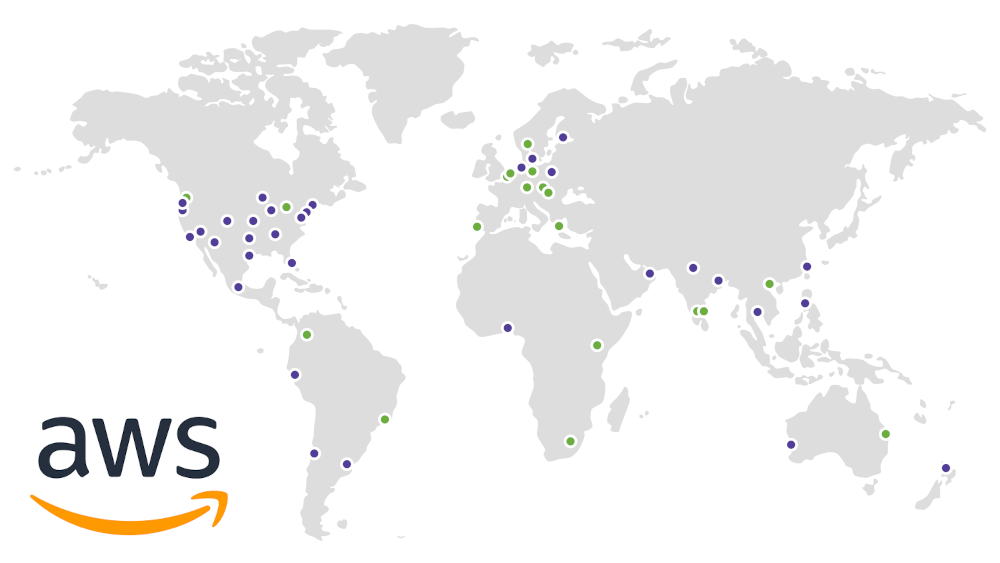
AWS operates 32 geographic regions with 102 availability zones worldwide as of 2024, providing the global reach necessary for modern applications that serve international audiences. This extensive infrastructure ensures low latency, high availability, and compliance with local data sovereignty requirements.
Each AWS region contains multiple isolated availability zones for high availability, with each zone consisting of one or more data centres equipped with independent power, networking, and cooling systems. This design prevents single points of failure and enables organizations to build resilient applications that can withstand individual component failures.
Over 450 Points of Presence (PoPs) including edge locations reduce latency globally by caching content closer to end users. These edge locations support Amazon CloudFront and other aws cloud services that benefit from geographic distribution, ensuring optimal performance regardless of user location.
AWS GovCloud regions provide enhanced security for government and regulated industries, offering additional compliance certifications and security controls required by organizations handling sensitive data. These specialized regions maintain the same high performance and reliability as standard AWS regions while meeting stringent regulatory requirements.
New regions planned for Malaysia, Mexico, New Zealand, and Thailand by 2025 demonstrate AWS’s continued commitment to global expansion and reducing latency for users in emerging markets. This ongoing infrastructure investment ensures that organizations can serve customers effectively regardless of geographic location.
Regions and Availability Zones
AWS regions are isolated geographic areas containing multiple data centers, with each region designed to be completely independent to ensure maximum fault tolerance and stability. Organizations can choose regions based on proximity to users, compliance requirements, or specific service availability.
Availability zones are distinct locations within regions with independent power and networking, connected through high-speed, redundant networks. This design enables organizations to deploy applications across multiple zones for enhanced reliability without sacrificing performance.
Applications can span multiple AZs for 99.99% availability and fault tolerance, with aws services automatically replicating data and distributing traffic across zones. This built-in redundancy ensures that applications remain available even if an entire availability zone becomes unavailable.
US-East-1 (Northern Virginia) is the largest AWS region with 6 availability zones and serves as the primary region for many global services. This region often receives new aws services first and provides the most comprehensive service availability for organizations requiring early access to new capabilities.
What Cloud Deployment Models Does AWS Offer?
Organizations can choose from several deployment models when implementing cloud computing with AWS, each offering different benefits and addressing specific requirements. Understanding these models helps organizations select the approach that best aligns with their business objectives, compliance needs, and existing infrastructure investments.
Cloud-native deployment runs applications entirely on AWS infrastructure, maximizing the benefits of cloud computing including elasticity, global reach, and managed services. This model works best for new applications or organizations ready to fully embrace cloud-first strategies.
Hybrid cloud connects on-premises infrastructure with AWS services, allowing organizations to extend their existing investments while gaining access to cloud capabilities. This approach enables gradual migration and supports workloads that must remain on-premises due to regulatory or technical requirements.
Multi-cloud strategies combine AWS with other cloud providers like Microsoft Azure, reducing vendor dependency and enabling organizations to combine best-of-breed services from multiple providers. While more complex to manage, this approach can provide additional resilience and negotiating power.
AWS Outposts brings native AWS services to on-premises data centers, providing consistent aws cloud services across hybrid environments. This solution addresses latency-sensitive applications and data sovereignty requirements while maintaining compatibility with existing aws workflows.
Public Cloud Deployment
Applications run completely in the AWS public cloud environment, sharing underlying infrastructure while maintaining security isolation through virtualization technologies and network controls. This shared model reduces costs significantly compared to dedicated infrastructure while maintaining enterprise-grade security.
Shared infrastructure reduces costs while maintaining security isolation, with AWS managing the underlying hardware and providing isolation through hypervisor technology and network segmentation. Organizations benefit from economies of scale while retaining complete control over their applications and data.
Instant scalability and global reach without physical hardware investment enables organizations to launch applications in multiple geographic regions within just a few clicks. This capability supports rapid business expansion and global customer acquisition without traditional infrastructure constraints.
Examples include web applications, mobile backends, and data analytics platforms that benefit from elastic scaling, global distribution, and managed services. Organizations like Airbnb and Netflix have built their entire platforms using public cloud deployment models, achieving massive scale and global reach.
Hybrid Cloud Deployment
AWS Direct Connect provides dedicated network connections to on-premises data centers, offering predictable bandwidth and enhanced security compared to internet-based connections. These private connections support latency-sensitive applications and large-scale data transfer requirements.
AWS Storage Gateway enables seamless data transfer between on-premises and cloud storage systems, supporting gradual migration strategies and hybrid backup solutions. Organizations can maintain on-premises primary storage while using cloud storage for backup and disaster recovery.
VMware Cloud on AWS allows running VMware workloads natively on AWS infrastructure, enabling organizations to extend existing virtualization investments to the cloud. This solution provides a bridge for VMware-based environments transitioning to cloud computing.
Ideal for organizations with regulatory requirements or existing infrastructure investments that prevent complete cloud migration, hybrid deployment models enable organizations to modernize gradually while maintaining compliance and protecting existing technology investments.
How Do AWS Cloud Computing Pricing Models Work?
Understanding AWS pricing models is crucial for optimizing cloud costs and maximizing the return on cloud investment. AWS offers several pricing options designed to accommodate different usage patterns and business requirements, from variable workloads to predictable long-term commitments.
Pay-as-you-go pricing means no upfront costs or long-term commitments for most services, allowing organizations to start small and scale based on actual usage. This model eliminates the risk of over-provisioning and enables rapid experimentation with new technologies and approaches.
Reserved Instances offer up to 75% savings for predictable workloads with 1-3 year terms, making them ideal for stable production workloads with consistent resource requirements. Organizations can reserve compute capacity in advance and receive significant discounts in exchange for commitment.
Spot Instances provide up to 90% discounts for flexible, interruption-tolerant workloads by using spare AWS capacity. This pricing model works well for batch processing, data analytics, and other workloads that can handle interruptions gracefully.
AWS Free Tier includes 750 hours of EC2 t2.micro instances monthly for 12 months, along with limited usage of many other aws services. This free tier enables organizations to explore and experiment with aws cloud services without initial cost commitment.
AWS Cost Explorer and AWS Budgets help monitor and optimize cloud spending through detailed usage analytics and automated alerts. These resource management tools provide visibility into spending patterns and help organizations identify optimization opportunities.
Cost Optimization Strategies
Right-sizing EC2 instances based on actual usage patterns reduces costs by matching instance types to workload requirements. AWS provides tools to analyze historical usage and recommend optimal instance configurations for improved cost effectiveness.
Auto Scaling automatically adjusts capacity to maintain performance at lowest cost, scaling resources up during peak demand and scaling down during quiet periods. This automation ensures optimal performance while minimizing unnecessary compute capacity and associated costs.
S3 Intelligent-Tiering automatically moves data to most cost-effective storage class based on access patterns, optimizing storage costs without requiring manual intervention. This feature analyzes data access patterns and transitions data between storage tiers to minimize costs while maintaining required performance.
AWS Trusted Advisor provides personalized recommendations to optimize costs, security, and performance across aws resources. This service continuously monitors deployments and suggests improvements to help organizations maximize their cloud investment and improve operational efficiency.
Benefits of Cloud Computing with AWS

Organizations choosing cloud computing in AWS gain access to a comprehensive platform that delivers tangible business benefits beyond simple cost savings. The combination of global infrastructure, managed services, and continuous innovation creates competitive advantages that extend far beyond traditional hosting solutions.
Elasticity allows scaling from zero to millions of users within minutes, enabling organizations to handle traffic spikes without over-provisioning for peak loads. This capability supports seasonal businesses, viral content, and rapid growth scenarios that would overwhelm traditional infrastructure.
99.99% uptime SLA ensures high availability for mission-critical applications, with AWS infrastructure designed to eliminate single points of failure. The global network of availability zones provides automatic failover capabilities that maintain application availability even during significant infrastructure events.
Global deployment enables reaching customers worldwide with low latency through aws regions and edge locations strategically positioned around the world. Organizations can deploy applications in multiple geographic regions to serve international customers with optimal performance.
Security certifications include SOC, PCI DSS, HIPAA, and FedRAMP compliance, meeting the stringent requirements of regulated industries. AWS maintains these certifications continuously, reducing the compliance burden for organizations operating in healthcare, finance, and government sectors.
Innovation speed increases with access to advanced services like AI/ML and IoT that would require significant research and development investment to build internally. AWS provides these advanced capabilities as managed services, enabling organizations to innovate faster and focus on core business differentiators.
The platform’s breadth means organizations can build complete solutions using integrated aws services rather than managing complex vendor relationships and integration challenges. This unified approach simplifies architecture decisions and reduces operational complexity while ensuring compatibility across components.
Cost savings typically range from 20-50% compared to on premises deployment when factoring in hardware, software maintenance, facility costs, and staff requirements. The operational expenditure model also improves cash flow and financial planning by converting fixed infrastructure costs to variable costs that scale with business growth.
Real-World AWS Cloud Computing Use Cases
Understanding how leading organizations use cloud computing with AWS provides insights into the practical applications and benefits achievable across different industries and use cases. These real-world examples demonstrate the versatility and scalability of aws cloud services in production environments.
Netflix streams to 230+ million subscribers using AWS for video delivery and analytics, processing over 1 billion hours of content monthly through aws global network. The entertainment giant uses machine learning services for recommendation algorithms and content delivery network services to ensure smooth streaming worldwide.
Airbnb processes over 150 billion data points daily using AWS big data analytics services, supporting real-time pricing optimization and fraud detection across millions of property listings. The platform relies on aws services to analyze user behavior, optimize search results, and maintain trust and safety across global markets.
NASA JPL uses AWS to analyze space mission data and Mars rover telemetry, processing vast amounts of scientific data that would overwhelm traditional computing infrastructure. The space agency uses aws compute services for complex simulations and stores mission-critical data using aws storage systems with extreme reliability requirements.
Capital One migrated entirely to AWS, closing all data centers by 2020 and becoming one of the first major financial institutions to achieve complete cloud transformation. The bank now operates more efficiently while meeting strict regulatory requirements and providing enhanced digital services to customers.
Moderna developed COVID-19 vaccine using AWS for computational research and development, accelerating drug discovery through high-performance computing and machine learning capabilities. The pharmaceutical company used aws services to analyze molecular data and run complex simulations critical to vaccine development.
Industry-Specific Applications
Healthcare organizations use AWS for HIPAA-compliant medical record storage and telemedicine platforms that require secure data handling and reliable performance. Electronic health record systems, medical imaging platforms, and telehealth applications benefit from aws compliance certifications and security features designed for sensitive data.
Financial services use AWS for real-time fraud detection and regulatory compliance, processing millions of transactions daily while maintaining strict security and audit requirements. Banking applications, trading platforms, and fintech startups use aws services to build secure, scalable financial systems that meet regulatory standards.
Media companies use AWS for content creation, distribution, and streaming workflows that require massive compute capacity and global reach. Video processing, live streaming, and content management platforms benefit from aws media services and content delivery capabilities.
Gaming companies use AWS for multiplayer game servers and player analytics, supporting millions of concurrent users while maintaining low latency and high availability. Game developers use aws services for player matchmaking, leaderboards, and real-time analytics that enhance gaming experiences.
Government agencies rely on AWS for secure cloud services that meet stringent security and compliance requirements while providing cost-effective alternatives to traditional government IT infrastructure. Public sector organizations use aws services for citizen services, data analytics, and disaster recovery applications.
Getting Started with AWS Cloud Computing
Beginning your journey with cloud computing in AWS requires understanding both the technical capabilities and practical steps for implementation. AWS provides comprehensive resources and tools designed to support organizations at every stage of their cloud adoption journey, from initial exploration to enterprise-wide transformation.
Create free AWS account to access Free Tier services and learning resources that enable hands-on experience without financial commitment. The free tier includes meaningful usage limits across core aws services, allowing organizations to build and test applications while learning cloud computing fundamentals.
AWS Management Console provides web-based interface for managing cloud services through an intuitive dashboard that simplifies complex infrastructure operations. The aws console enables both technical and non-technical users to deploy and monitor aws resources without requiring command-line expertise.
AWS CLI and SDKs enable programmatic access in Python, Java, JavaScript, and other languages, supporting infrastructure as code practices and automated deployment pipelines. These tools integrate with existing development workflows and enable teams to manage aws resources using familiar programming languages and frameworks.
AWS Well-Architected Framework provides best practices for cloud architecture design across five pillars: operational excellence, security, reliability, performance efficiency, and cost optimization. This framework helps organizations design systems that are secure, reliable, and cost-effective while following industry best practices.
AWS Training and Certification offers over 500 free digital courses and hands-on labs covering everything from basic cloud concepts to advanced specialized topics. The comprehensive training program supports different learning styles and provides clear certification paths for technical professionals.
The aws console includes a service search function and service categorization that helps newcomers find their way through the extensive service portfolio efficiently. New users can explore services by category or search for specific capabilities to find the right tools for their requirements.
Getting started projects often include deploying static websites using Amazon S3 and CloudFront, setting up virtual servers with Amazon EC2, or building serverless applications using AWS Lambda. These foundational projects provide practical experience with core aws cloud services while building confidence for more complex implementations.
Resource monitoring through aws console provides real-time visibility into usage, performance, and costs across all deployed resources. This monitoring capability helps organizations understand their aws environment and optimize both performance and costs as they scale their cloud usage.
Migration planning services help organizations assess existing applications and infrastructure for cloud readiness, providing roadmaps and best practices for successful cloud adoption. These services reduce risk and accelerate migration timelines by drawing on AWS expertise and proven methodologies.
Community resources including documentation, forums, and user groups provide ongoing support and learning opportunities for organizations implementing cloud computing with AWS. The active aws community shares knowledge, best practices, and solutions that help organizations overcome common challenges and accelerate their cloud success.
Cloud computing in AWS is more than a technology platform. It gives organizations a way to innovate faster, scale globally, and optimize costs while maintaining enterprise-grade security and reliability. The comprehensive service portfolio, global infrastructure, and proven track record make AWS an ideal choice for organizations ready to embrace the future of computing.
Start your cloud computing journey with AWS today by creating a free account and exploring the services that can transform your business operations. Whether you’re building your first web application or planning a complete digital transformation, aws cloud services provide a foundation for growth as your organization scales.
Frequently Asked Questions
What is cloud computing in AWS?
Cloud computing in AWS delivers on-demand IT resources over the internet with pay-as-you-go pricing. Instead of buying and maintaining physical servers, organizations access compute, storage, databases, and more than 200 other services through AWS managed infrastructure. Scottship Solutions helps nonprofits decide whether that shift fits their budget and technical needs.
How much can an organization save by moving to AWS?
Cost savings typically range from 20 to 50 percent compared to on premises deployment once you factor in hardware, software maintenance, facility costs, and staff. The pay-as-you-go model also converts fixed infrastructure costs into variable costs that scale with usage, which improves cash flow and financial planning.
What are the main AWS pricing models?
AWS offers pay-as-you-go pricing with no upfront commitment, Reserved Instances that save up to 75 percent for predictable one to three year workloads, and Spot Instances that discount up to 90 percent for interruption-tolerant jobs. The AWS Free Tier adds 750 hours of EC2 t2.micro instances monthly for 12 months so you can test before you commit.
Which AWS services should a beginner start with?
Common first projects include hosting a static website with Amazon S3 and CloudFront, running a virtual server with Amazon EC2, or building a serverless app with AWS Lambda. These core services cover the most frequent needs and give you hands-on experience before you take on more complex builds.

Written by
Josh Bass
Cybersecurity Consultant at Scottship Solutions
Josh leads security assessments and compliance audits for mission-driven organizations. He helps nonprofits build defensible security postures, meet HIPAA and state privacy requirements, and respond to threats before they become incidents.
Certifications
CompTIA Security+ Certified
Industries Served
Healthcare & Community Health (HIPAA), Human Services, Child Advocacy, Foundations & Grantmakers