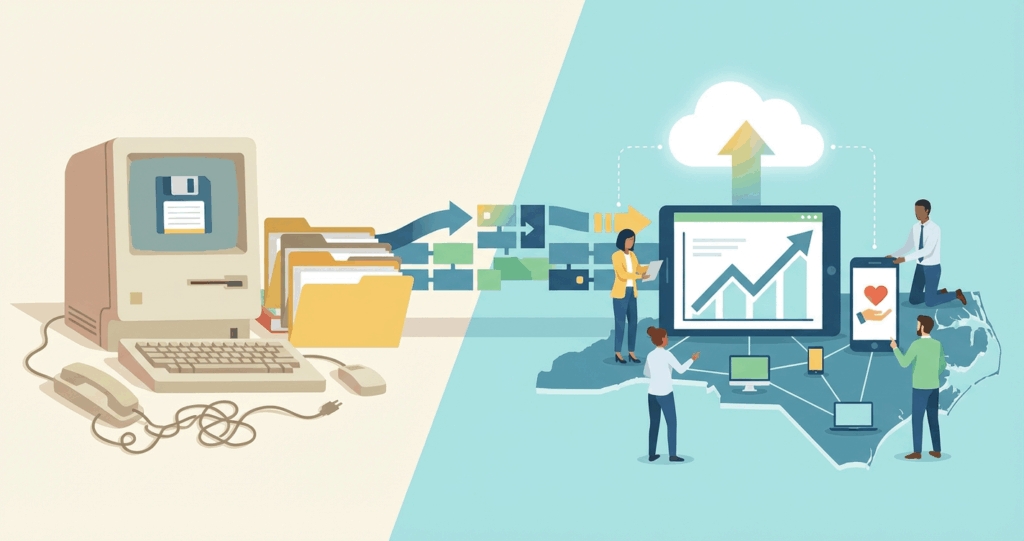
TL;DR: Modernizing your nonprofit’s technology starts with an honest audit of your current systems, then prioritizing the upgrades that matter most: a unified CRM and data ecosystem, cloud platforms, stronger cybersecurity, and practical automation, all rolled out in phases with staff training. This guide walks North Carolina nonprofits through each step, from assessment to roadmap. Scottship Solutions helps nonprofits assess what they have, prioritize upgrades, and build a reliable IT foundation.
Is your nonprofit struggling to keep up with outdated technology, hindering your mission and efficiency? This comprehensive guide will walk you through the essential steps to modernize your tech infrastructure so your organization can keep pace with the tools it relies on every day. Nonprofit work now increasingly depends on technology and digital tools to enhance fundraising, event management, community engagement, and impact tracking, making tech adoption vital for greater efficiency and effectiveness. Within the broader social sector, investing in digital infrastructure is essential for delivering services to the community, yet it is often overlooked compared to other program investments. In North Carolina alone, nonprofits that embrace modern technology see an average increase of 25% in donor engagement, showcasing the critical impact of effective tech upgrades.
What Is Nonprofit Technology Modernization?
Nonprofit technology modernization involves updating and optimizing the information technology infrastructure of nonprofit organizations, including hardware, software, and networking components, to improve efficiency, enhance service delivery, and increase overall impact. Successful modernization initiatives include aligning IT with the business, simplifying and optimizing the existing IT infrastructure, application modernization, and operating securely in a hybrid environment. This process typically includes upgrading outdated software, streamlining tech stacks, and integrating new tools that align with the specific needs of the organization. Building a strong data infrastructure is essential as it provides the foundation for efficient data management, compliance, and informed decision-making, supporting operational effectiveness, reporting, and strat
- What Is Nonprofit Technology Modernization?
- What Is the Current State of Nonprofit Tech in North Carolina?
- Why Does Modernization Matter for Mission Impact?
- How Do You Assess Your Current Technology Infrastructure?
- How Do You Build a Unified Data Ecosystem and CRM Strategy?
- How Can Nonprofits Use Agentic AI and Intelligent Automation?
- How Do You Modernize Fundraising and Donor Management Technology?
- How Do You Strengthen Cybersecurity and Data Protection?
- What Are the Best Practices for Successful Tech Modernization?
- What Common Mistakes Should You Avoid During Modernization?
- How Do You Create a Nonprofit Technology Modernization Roadmap?
- When Should You Partner With Technology Experts for Support?
- Why Does Data Hygiene Matter for Reliable Insights?
- Community Data and Data Sovereignty
- Data Governance and Leadership
- Equity and Justice in Data Infrastructure
- Tribal Data Considerations
Nonprofit data management is not simply an IT problem but a strategy with significant consequences for transparency, decision making, funding outcomes, and long-term sustainability.
What Is the Current State of Nonprofit Tech in North Carolina?
The current state of nonprofit tech in North Carolina reveals significant gaps in resources and infrastructure. Many organizations still rely on outdated systems, limiting their effectiveness. In fact, many nonprofits remain dependent on legacy systems and old solutions, which can hinder their ability to modernize, automate processes, and adopt new technologies. However, the push for modernization is growing, with nonprofits recognizing that upgrading technology can streamline operations, enhance service delivery, and ultimately drive greater community impact.
Why Does Modernization Matter for Mission Impact?
Modernization is crucial for nonprofits aiming to amplify their mission impact. By updating technology, organizations can streamline operations, enhance service delivery, and allocate resources more effectively. Modernization also increases operational agility, enabling nonprofits to respond quickly to changing needs and adapt to new opportunities or challenges. Improved technology can directly enhance the customer experience for both donors and beneficiaries, making interactions smoother and more satisfying. In North Carolina, this shift not only supports efficiency but also fosters stronger community engagement and outreach.
How Do You Assess Your Current Technology Infrastructure?
Assessing your current technology infrastructure is crucial for nonprofits in North Carolina. Many organizations face challenges due to outdated systems, which can lead to inefficient operations and hinder service delivery. A technology audit identifies gaps and areas for improvement. Start by evaluating the existing tech stack, including infrastructure components such as hardware devices, network resources, networking components, and software applications, as well as network systems. Assessing network infrastructure is a key part of the audit to ensure reliable connectivity and support for your operations. It is also important to evaluate your existing data and existing systems to understand what is already in place and how new solutions can be integrated effectively.
Consider how well these components serve your organizational goals. Are they user-friendly? Do they integrate seamlessly with other systems? Gathering feedback from staff can provide insights into pain points and inefficiencies. Additionally, consider your organization’s technical capabilities and the organization’s ability to implement data management best practices effectively, such as standardization, security, and integration. For instance, a study showed that 60% of nonprofits in North Carolina report struggles with inadequate technology resources, which often results in wasted time.
Conducting a Comprehensive Technology Audit
Conducting a comprehensive technology audit is essential for nonprofits in North Carolina. This process involves evaluating current systems, identifying inefficiencies, and determining which tools need upgrades or replacements. By assessing software, hardware, compute resources, data centers, and workflows, organizations can pinpoint areas for improvement. A thorough audit not only enhances operational efficiency but also aligns technology with organizational goals, ultimately boosting service delivery and community impact.
Identifying Gaps, Redundancies, and Pain Points
Identifying gaps, redundancies, and pain points in a nonprofit’s technology infrastructure is crucial for effective modernization. Assessing the entire IT environment, the combination of hardware, software, networks, and connected services, helps identify inefficiencies and areas for improvement across the organization. Many organizations in North Carolina find outdated systems that lead to duplicated efforts and inefficiencies. For example, data entry might occur in multiple platforms, creating inconsistencies and wasting time. Conducting a thorough assessment helps pinpoint these issues, enabling nonprofits to streamline operations and allocate resources more effectively. By modernizing the environment, organizations support greater efficiency and resilience, enhancing their technological capabilities and ultimately improving their service delivery and impact in the community.
How Do You Build a Unified Data Ecosystem and CRM Strategy?
Building a unified data ecosystem and CRM strategy is essential for nonprofits to streamline operations and enhance donor engagement. Cloud environments and robust cloud infrastructure provide a scalable, flexible foundation for unified data management and seamless integration across platforms. By integrating various data sources, organizations can create a comprehensive view of their stakeholders, enabling targeted outreach and personalized communication. To achieve this, nonprofits should integrate data from multiple platforms, including program management tools and fundraising software, to create a unified view that supports comprehensive analysis and evidence-based decision-making.
In North Carolina, nonprofits often struggle with fragmented data systems. A unified approach allows for better data management, improving decision-making and resource allocation. Implementing a nonprofit data warehouse provides a centralized, integrated repository that consolidates data from sources such as CRM systems, fundraising software, and program management tools. An integrated platform further streamlines operations by combining donor management, program tracking, volunteer coordination, and financial reporting into a single solution. This is vital, as approximately 60% of nonprofits in the state report challenges with data integration, limiting their operational effectiveness. By investing in a cohesive CRM strategy, organizations can significantly boost their impact within the community.
Nonprofit organizations should prioritize features that directly support their mission and operational needs when evaluating database solutions.
Moving Beyond Siloed Systems
Siloed systems can severely restrict a nonprofit’s efficiency and collaboration. By integrating various technologies and breaking down these silos, organizations in North Carolina can share data seamlessly, improve communication, and enhance service delivery. Adopting a hybrid approach, including hybrid cloud solutions, enables nonprofits to unify on-premises and cloud resources, providing greater flexibility and scalability to support evolving needs. This holistic approach fosters a more agile and responsive nonprofit ecosystem.
Selecting Integration-First Solutions
Selecting integration-first solutions is crucial for nonprofits aiming to enhance their technology infrastructure. These solutions prioritize seamless connectivity among various tools, enabling organizations to streamline processes and improve overall efficiency. Private cloud and cloud computing options can provide secure, scalable integration for nonprofit technology systems, supporting flexible and mission-critical environments. By focusing on integration, nonprofits can maximize the benefits of their technology investments and better serve their communities.
Cloud-Based Solutions for Scalability and Accessibility
Cloud-based solutions offer nonprofits in North Carolina enhanced scalability and accessibility. Many organizations turn to cloud-based solutions to achieve cost effective scalability and operational efficiency, allowing them to support growth and innovation without excessive spending. Migrating to cloud platforms like Microsoft 365 or Google Workspace provides cost savings, scalability, and accessibility for nonprofits. These platforms enable organizations to access critical tools and data from anywhere, fostering collaboration among remote teams. Additionally, cloud services reduce the need for expensive hardware investments while providing flexibility to adapt to changing needs. By putting these technologies to work, nonprofits can streamline operations and focus more on their mission rather than IT constraints.
How Can Nonprofits Use Agentic AI and Intelligent Automation?
Implementing agentic AI and intelligent automation can reshape how North Carolina nonprofits operate. By integrating AI-driven solutions, including artificial intelligence, machine learning, and advanced generative AI, organizations can automate routine tasks such as data entry and donor management, freeing up valuable time for staff to focus on mission-driven activities. Artificial Intelligence can also automate tasks like donor engagement campaigns and financial reporting. Predictive analytics can forecast donor behavior and optimize the timing of communications using tools like Salesforce Einstein. Automated systems clean, validate, and archive data regularly for nonprofits. These technologies are driving innovation and efficiency across modern IT infrastructure, enabling nonprofits to reimagine their operations and adopt the latest advancements in automation.
In fact, research indicates that 70% of nonprofits believe automation could significantly enhance their operational efficiency. Intelligent automation not only streamlines processes but also improves data accuracy, which is crucial for effective decision-making and enhanced business intelligence. Data analysis enables nonprofits to derive insights that improve decision-making, optimize fundraising, and enhance overall organizational efficiency. Performance monitoring is essential to ensure that automated systems are running efficiently and continue to meet organizational needs. Nonprofits can draw on local partnerships with tech firms to access tailored solutions that meet their unique needs, ultimately leading to greater community impact.
Automated workflows can also reduce manual errors for routine tasks like donor thank-you emails and tax receipt generation.
Automating Administrative Tasks Without Losing the Human Touch
Automating administrative tasks can significantly improve efficiency in nonprofits while maintaining a personal touch. Tools like donor management systems and automated communication platforms help streamline operations. However, it is crucial to balance automation with human interaction. For example, personalized thank-you notes can be automated, but adding a handwritten signature enhances the connection. In North Carolina, organizations can draw on local tech resources to implement these solutions effectively, ensuring they enhance rather than replace human engagement.
Using Predictive Analytics for Strategic Decision-Making
Predictive analytics empowers nonprofits in North Carolina to make informed strategic decisions by drawing on data trends and patterns. By analyzing past performance and community needs, organizations can allocate resources more effectively, forecast outcomes, and tailor programs to maximize impact. This data-driven approach enhances operational efficiency and strengthens community engagement.
How Do You Modernize Fundraising and Donor Management Technology?
Modernizing fundraising and donor management technology is crucial for nonprofits in North Carolina. Many organizations still rely on outdated systems that limit their ability to engage effectively with donors. Software development plays a key role in creating modern fundraising tools that are more secure, efficient, and tailored to nonprofit needs. By adopting modern technology, nonprofits can streamline processes, improve donor tracking, and enhance communication. For example, implementing a centralized donor management system can automate donor acknowledgment and simplify reporting, freeing up staff to focus on relationship-building. Additionally, nonprofit CRM systems with grant management features are vital for tracking compliance with grant reporting and ensuring all funding requirements are met.
Research shows that nearly 60% of North Carolina nonprofits face challenges due to inadequate technology resources, which can lead to inefficiencies and lost opportunities. Upgrading to contemporary solutions not only helps in managing donor relationships more effectively but also improves overall operational efficiency. Tools like customer relationship management systems can provide insights into donor behavior, allowing organizations to tailor their fundraising strategies. It is also essential to protect sensitive donor information to maintain trust, comply with legal and regulatory requirements, and safeguard donor confidentiality.
Investing in these modern solutions ensures that nonprofits can not only meet current demands but also adapt to future fundraising trends, ultimately maximizing their impact in the communities they serve. These upgrades are part of a larger digital transformation in the nonprofit sector, enabling organizations to innovate and respond more effectively to changing needs. Nonprofit-specific CRM systems are essential for managing donor relationships and engagement.
Digital-First Fundraising Strategies
Digital-first fundraising strategies rely on online platforms to reach donors and streamline giving. In North Carolina, nonprofits can use social media campaigns, email outreach, and crowdfunding to engage supporters effectively, maximizing their fundraising potential while minimizing costs.
Donor Data Analytics and Personalization at Scale
Donor data analytics allows nonprofits to personalize outreach at scale, enhancing donor engagement and retention. By analyzing giving patterns, organizations can tailor communication strategies, ensuring messages resonate with individual donors. Donor data analytics also supports impact measurement by tracking and demonstrating program outcomes to funders and stakeholders, which is essential for securing grants and maintaining transparency. This targeted approach not only boosts fundraising efforts but also fosters stronger relationships, ultimately increasing the impact of nonprofit initiatives across North Carolina’s diverse communities.
How Do You Strengthen Cybersecurity and Data Protection?
Strengthening cybersecurity and data protection is crucial for nonprofits in North Carolina. With a significant number of organizations facing cyber threats, ensuring that sensitive data remains secure is paramount. Strong cybersecurity measures should include endpoint protection, data encryption, and email security. A recent survey indicated that 70% of nonprofits in the state reported experiencing a cybersecurity incident in the past year, highlighting the urgent need for enhanced protective measures. Nonprofits should also be aware of federal government standards and guidelines for cybersecurity, which inform best practices and compliance efforts. Additionally, complying with expanding data privacy regulations is essential, as organizations must select technology solutions that exceed current standards to ensure ongoing security and compliance.
Investing in robust cybersecurity frameworks not only safeguards donor information but also builds trust with stakeholders. Effective cybersecurity requires organizations to adopt new strategies and operational models, such as implementing multi-factor authentication, regular security audits, and staff training, to significantly reduce vulnerabilities. It is also important to emphasize data ownership, ensuring that communities have control over their data and are empowered in how their information is collected, managed, and used. By prioritizing cybersecurity, nonprofits can focus on their mission without the looming threat of data breaches.
Essential Security Measures for Nonprofit Data
Nonprofits must prioritize data security to protect sensitive information. Essential measures include implementing strong password policies, using encryption for data storage and transmission, regularly updating software, and conducting employee training on cybersecurity practices to mitigate risks and ensure compliance.
Disaster Recovery and Business Continuity Planning
Disaster recovery and business continuity planning are vital for nonprofits in North Carolina. These strategies ensure organizations can maintain operations during crises, such as natural disasters or cyberattacks. By developing robust plans, nonprofits can protect sensitive data, minimize downtime, and sustain essential services to the communities they serve.
What Are the Best Practices for Successful Tech Modernization?
Successful tech modernization for nonprofits in North Carolina hinges on several best practices. First, organizations should conduct a thorough assessment of their current technology environment. This involves identifying outdated systems and understanding the specific needs of their stakeholders. Engaging staff and volunteers in this process can provide valuable insights, ensuring that the new technology aligns with their workflows and enhances service delivery. As nonprofits modernize, adopting a new operating model is crucial to effectively manage and integrate these updated technologies, enabling automation, security, and adaptability. Additionally, developing and implementing a comprehensive data strategy is essential to support nonprofit operations, ensure data quality, privacy, and compliance, and facilitate informed decision-making. Establishing clear data standards prevents the confusion and duplication that plague many nonprofit databases.
Next, prioritizing training is essential. Even the most advanced tools will fall short if users are not comfortable with them. Offering ongoing training sessions helps staff adapt to new systems, fostering a culture of tech-savviness within the organization. Additionally, drawing on local resources, such as partnerships with tech firms or universities, can provide nonprofits with tailored support and expertise. To maintain the integrity of their data, nonprofits should also establish ongoing procedures and use automated tools for maintaining data quality, including regular data hygiene practices like monitoring duplicates and updating contact information.
When evaluating new systems, organizations should consider the level of technical expertise required to implement and manage new CRM systems, as solutions requiring extensive technical expertise may be overwhelming for smaller organizations. Lastly, nonprofits should adopt an iterative approach to modernization. Implementing changes in phases allows for adjustments based on feedback and performance metrics. This strategy not only mitigates risks but also ensures that technology investments yield measurable outcomes. Modernization efforts often involve moving away from traditional IT infrastructure, replacing on-premises hardware and software with more flexible, cloud-based solutions. Establishing data governance frameworks is also critical, particularly for community-led research models, to ensure ethical data management and shared decision-making. Key practices for nonprofit data infrastructure include strict data governance, integrating disparate systems, automating workflows, and ensuring compliance with regulations like GDPR and HIPAA. With over sixty percent of nonprofits in North Carolina facing inadequate technology resources, these best practices can significantly enhance operational efficiency and community impact.
Start Small with Pilot Programs
Starting small with pilot programs allows nonprofits in North Carolina to test new technologies without overwhelming their budgets or staff. By implementing a limited-scale initiative, organizations can evaluate effectiveness, gather feedback, and make necessary adjustments before a full rollout. This approach minimizes risk and fosters innovation, enabling nonprofits to modernize their tech infrastructure gradually while ensuring that the solutions truly meet their unique needs and challenges.
Prioritize Change Management and Staff Training
Change management and staff training are crucial for successful technology modernization in nonprofits. Engaging staff early in the process fosters buy-in and reduces resistance. Ongoing training ensures that team members feel confident and equipped to use new tools effectively.
Build Digital Literacy Across Your Organization
Building digital literacy across your organization is essential for maximizing the benefits of modern technology. Training staff in digital tools enhances efficiency, fosters collaboration, and ultimately strengthens your nonprofit’s mission.
What Common Mistakes Should You Avoid During Modernization?
Modernizing technology can be a complex process for nonprofits, and several common mistakes can derail efforts. One major pitfall is failing to assess current needs accurately. Organizations often rush into purchasing new systems without understanding what they truly require. This can lead to wasted resources on tools that do not align with their mission. Good data management is essential for operational efficiency, compliance, and effective decision-making, helping nonprofits organize, access, and use information to improve fundraising, reporting, and overall success.
Another frequent error is neglecting staff training. Even the best technology is ineffective if users are not properly equipped to use it. In North Carolina, about 70% of nonprofits report that staff members struggle with new technologies due to inadequate training. Data work is an ongoing process that requires a supportive culture, discipline, and collaboration across teams to ensure data effectively serves organizational goals.
Additionally, overlooking data migration can result in lost information or corrupted files during the transition to new systems. Ensuring a solid plan for data transfer and management is crucial.
Finally, not involving stakeholders in the decision-making process can create resistance to change. Engaging staff and volunteers fosters buy-in and ensures that the chosen solutions meet everyone’s needs. To truly move forward, nonprofits should seek innovative solutions that replace outdated systems, focusing on automation, cybersecurity, cloud adoption, and digital transformation. Avoiding these mistakes can significantly enhance the success of modernization efforts in nonprofit organizations. Effective data management also eliminates duplicate efforts and enables staff to focus on mission-critical activities rather than data maintenance.
Trying to Automate Everything at Once
Many nonprofits in North Carolina attempt to automate all processes simultaneously, leading to confusion and inefficiency. This approach often overwhelms staff and can result in technology misalignment with organizational goals. Instead, it is more effective to prioritize automation in stages. Focus on the most time-consuming tasks first, such as donor management or reporting, and gradually integrate additional systems. This method allows for smoother transitions and better team adaptation to new technologies.
Neglecting Integration Capabilities
Neglecting integration capabilities can severely limit a nonprofit’s operational efficiency. Without seamless connections between tools, data silos emerge, leading to duplicated efforts and wasted resources. This fragmentation hinders effective decision-making and impacts overall mission delivery.
Underestimating the Importance of Staff Adoption
Staff adoption is often overlooked but is crucial for successful technology modernization in nonprofits. Without buy-in from team members, even the best systems can fail. Training sessions tailored to specific roles can enhance comfort with new tools. Engaging staff early in the process fosters a sense of ownership and boosts overall productivity.
How Do You Create a Nonprofit Technology Modernization Roadmap?
Creating a technology modernization roadmap is essential for nonprofits in North Carolina aiming to enhance their operational efficiency and impact. As technology markets continue to grow and evolve, aligning technology investments with current market trends is critical for maximizing value and staying competitive. This roadmap should start with a clear assessment of the current technology environment. Organizations need to identify outdated systems, bottlenecks, and areas where technology can streamline processes. Engaging stakeholders, including staff and beneficiaries, can provide valuable insights into specific needs and pain points. It is also important to identify specific data requirements and define key performance indicators that will measure success and guide decision-making.
Next, prioritize the modernization efforts based on urgency and potential impact. For example, if data management issues are hindering reporting capabilities, focusing on a new data management system may yield immediate benefits. Establishing a timeline with milestones keeps the project on track. Tracking program impact should be included as part of the roadmap to ensure that technology investments directly support the effectiveness and outcomes of nonprofit activities. Many nonprofits often overlook the importance of training staff on new systems, which is crucial for ensuring smooth transitions.
In North Carolina, nonprofits face unique challenges, including budget constraints. However, studies show that organizations that effectively modernize their technology can increase productivity by up to 30%. This improvement can lead to better service delivery and enhanced community engagement. By following a structured roadmap and tapping developer tools that support innovation and sector-specific solutions, nonprofits can not only modernize their technology but also position themselves for long-term success in serving their communities effectively. Nonprofits should define clear KPIs to ensure technology supports the organizational mission rather than serves as a distraction.
Seven-Step Implementation Framework
Implementing a seven-step framework can streamline the modernization of nonprofit technology. This process typically includes assessing current systems, defining goals, selecting appropriate tools, and training staff. Following these steps ensures a structured approach, reducing the risk of disruptions. For North Carolina nonprofits, this framework is particularly valuable, as it maximizes limited resources and enhances overall operational effectiveness, ultimately leading to a greater community impact.
Budgeting and Resource Planning for Tech Initiatives
Budgeting for tech initiatives in nonprofits requires a strategic approach that aligns financial resources with organizational goals. Begin by assessing current technology needs and identifying gaps. In North Carolina, many nonprofits benefit from local grants and partnerships that can supplement their budgets. Allocate funds not just for initial investments but also for ongoing maintenance and training. This holistic view ensures that the technology remains effective and relevant. Prioritize initiatives that promise the highest return on investment, enhancing both operational efficiency and community impact. As a reference point, the nonprofit IT spending benchmark built from 325,263 Form 990 filings finds that the median nonprofit reporting technology costs puts about 1.1% of total expenses there, a figure that holds between 1.0% and 1.2% at every size from $100k to more than $250M in revenue.
When Should You Partner With Technology Experts for Support?
Partnering with technology experts can significantly enhance the effectiveness of nonprofit organizations in North Carolina. These partnerships give nonprofits access to specialized knowledge in IT support, software selection, and system optimization. For instance, local nonprofits can benefit from collaborations with firms that understand the unique challenges they face, including budget constraints and outdated technology.
A case in point is the increasing number of nonprofits in the state that have successfully transitioned to cloud-based solutions. This shift not only streamlines operations but also allows organizations to access tools that improve collaboration and data management. When selecting technology solutions, choosing the right operating system is a key consideration, as it forms the foundation for secure, reliable, and isolated environments, especially when using virtualization or cloud infrastructure with expert partners. According to a study, nearly 70% of nonprofits in North Carolina have reported enhanced efficiency after modernizing their tech infrastructure. By working with experts, these organizations can identify the right technology stack that aligns with their mission, ensuring that resources are used effectively to maximize community impact.
Ultimately, the right technology partnerships can empower nonprofits to focus on their core mission while ensuring they have the necessary tools to thrive as their digital needs grow.
Why Does Data Hygiene Matter for Reliable Insights?
Mission-driven data management begins with transforming your information into a trusted foundation for impact. Data hygiene empowers nonprofit organizations to safeguard donor trust while unlocking actionable insights that drive your mission forward. This ongoing process of identifying errors, eliminating duplicates, and standardizing information across systems is not just technical maintenance but mission-critical stewardship that protects every contribution and amplifies every program outcome.
Implementing robust data hygiene practices empowers your nonprofit to operate with confidence and transparency. Establish clear protocols that protect donor information from the moment it enters your systems and conduct regular audits that strengthen your data’s reliability. When staff and volunteers follow standardized procedures, you are building a culture of accountability that safeguards supporter trust. Automated validation and deduplication tools streamline this protection, ensuring your data remains a powerful asset for advancing your cause across all platforms.
Strategic data hygiene checks empower mission-driven organizations to make decisions rooted in truth and trust. Clean, reliable data enables you to demonstrate real program outcomes, measure authentic impact, and identify trends that guide strategic growth. Clean data also provides a deeper understanding of program outcomes and community needs, informing more effective strategies and solutions. This foundation supports stronger donor relationships through accurate communication preferences and current contact details, fostering deeper engagement with supporters who fuel your mission.
Prioritizing data hygiene within your management strategy empowers your organization to allocate resources with precision, demonstrate unwavering transparency, and advance your mission with absolute confidence. Strong data hygiene practices should be guided by data ethics to ensure responsible and fair use of information. By investing in ongoing data stewardship, nonprofits transform information into their most powerful tool for sustainable growth and measurable impact, turning every data point into a stepping stone toward greater mission achievement.
Community Data and Data Sovereignty
Community data drives effective nonprofit operations. It is the essential information generated by and about the communities you serve. This data empowers your organization to make smart decisions, streamline programs, and measure real impact. From service usage statistics to community needs assessments, every data point matters. But here is what transforms good data into powerful insights: data sovereignty. Communities deserve the right to control, access, and govern their own information.
Smart nonprofits embrace data sovereignty by building robust governance frameworks that respect community ownership at every step. This means maintaining rock-solid data quality and security while ensuring your practices stay transparent and inclusive. When you involve community members in decisions about how their data gets collected, stored, and used, you build trust and empower people to drive data-driven change.
Promoting data literacy within your community creates lasting impact. When community members understand how you manage and use their data, they become powerful advocates for their needs and catalysts for positive change. Nonprofit leaders should provide clear training and accessible resources that demystify data processes and encourage active participation.
Prioritizing community data and data sovereignty strengthens the bond between your nonprofit and the communities you serve. It ensures your data management goes beyond compliance and efficiency. It empowers communities to shape their own futures through informed, ethical, and collaborative data practices. Every data decision becomes an opportunity to build trust and amplify your mission’s impact.
Data Governance and Leadership
Strong data governance empowers nonprofits to protect what matters most: donor trust and mission impact. It is the foundation that safeguards sensitive information while streamlining operations through clear policies, proven processes, and practical standards. For mission-driven organizations, data governance is not just another technical checkbox. It is a leadership opportunity that directly multiplies operational efficiency and amplifies program outcomes.
Nonprofit leaders hold the power to transform their organizations through strategic data governance frameworks. This begins with establishing crystal-clear policies that protect donor data, secure sensitive information, and ensure responsible stewardship. Smart leaders assign specific data ownership roles within their teams, creating accountability that ensures consistent, ethical data handling. When everyone knows their role in protecting and managing organizational data, you build a culture where information becomes a strategic asset rather than a liability.
Building a thriving culture of data stewardship requires ongoing investment in your team’s knowledge and capabilities. When staff and stakeholders understand how proper data governance protects donor trust and enables mission success, they become champions of best practices. Equipping your team with the right tools and training transforms data management from a burden into a mission multiplier that safeguards sensitive information while maintaining data quality.
Strategic data governance unlocks your nonprofit’s potential to create greater impact with every decision. With reliable, well-managed data flowing through your organization, you can streamline daily operations, monitor mission-critical performance indicators, and make confident decisions that amplify program outcomes. When nonprofit leaders invest in robust data governance, they do not just mitigate risks. They empower their entire organization to navigate complexity, protect donor trust, and drive sustainable mission success through technology that truly serves their cause.
Equity and Justice in Data Infrastructure
Empowering nonprofits with equity-driven data infrastructure transforms how organizations protect and serve their communities. Mission-focused nonprofits must navigate beyond basic technical upgrades to build data systems that truly safeguard and amplify the voices of every community member they serve.
This journey starts with designing data systems that actively identify and eliminate barriers facing marginalized populations. Nonprofit leaders should streamline their data collection approach to capture the real experiences and urgent needs of underserved groups, not just the majority voice. This means revamping data models, expanding trusted sources, and engaging directly with community partners to understand their unique perspectives and challenges.
Equity-focused data infrastructure empowers those who need support most by making critical information accessible to everyone. This includes protecting data in multiple languages, ensuring digital accessibility for all users, and providing hands-on training to build data confidence among community members. By democratizing access to nonprofit insights, organizations equip individuals and groups to advocate effectively and participate meaningfully in decisions that impact their lives.
Ultimately, prioritizing equity and justice in data infrastructure transforms nonprofit information from a simple measurement tool into a powerful catalyst for lasting social change. It ensures that data-driven decisions protect vulnerable populations, address systemic barriers, and drive positive outcomes for all community members, especially those who have historically been overlooked or underserved.
Tribal Data Considerations
Empowering Tribal Data Sovereignty Through Strategic Nonprofit Partnerships
When partnering with tribal nations and organizations, nonprofit data management becomes a powerful tool for impact but only when guided by respect, genuine collaboration, and unwavering commitment to tribal data sovereignty. Tribal data represents the heartbeat of community well-being: social connections, economic opportunities, and cultural preservation, and managing it requires both expertise and deep responsibility.
Build Trust-Driven Partnerships That Deliver Results
Nonprofit organizations must champion respectful, collaborative relationships with tribal partners, recognizing their fundamental right to control and govern their own information. This means actively supporting tribal data sovereignty by ensuring communities maintain complete ownership over how their data gets collected, stored, and used. Nonprofit leaders should engage in transparent dialogue with tribal representatives to co-create data management practices that honor cultural values and drive community priorities forward.
Strengthen Local Capacity for Long-Term Impact
Promoting data literacy and capacity building within tribal communities is not just beneficial. It is essential for sustainable success. By delivering targeted training and practical resources, nonprofits can strengthen local expertise in data quality, analysis, and security, empowering tribal nations to use their information for self-determined development and powerful advocacy initiatives.
Transform Historical Challenges into Future Opportunities
Nonprofit leaders must acknowledge and address the historical and ongoing impacts of colonization and marginalization on tribal data practices. By implementing culturally sensitive, responsive, and empowering approaches to data management, nonprofits can dramatically improve data quality and accuracy while advancing tribal self-determination. This approach creates more equitable, effective, and respectful partnerships that generate measurable positive outcomes for tribal communities.
Frequently Asked Questions
What is nonprofit technology modernization?
Nonprofit technology modernization means updating and optimizing your IT infrastructure, including hardware, software, and networking, to improve efficiency, service delivery, and impact. It usually involves upgrading outdated software, streamlining tech stacks, and integrating new tools that fit your organization’s specific needs.
Where should a nonprofit start when modernizing its technology?
Start with a technology audit. Evaluate your existing tech stack, including hardware devices, network resources, and software applications, identify gaps and redundancies, and gather feedback from staff about pain points before you choose new tools.
How much can modernization improve nonprofit productivity?
Studies show that nonprofits that effectively modernize their technology can increase productivity by up to 30%, and North Carolina nonprofits that adopt modern technology see an average 25% increase in donor engagement.
How can Scottship Solutions help with nonprofit tech modernization?
Scottship Solutions is a fractional IT consulting firm that works with nonprofits to assess their current technology, prioritize upgrades, and build a reliable IT foundation. If you need help putting this guide into practice, we can walk you through it.

Written by
Will Facques
Senior IT Consultant at Scottship Solutions
Will works directly with nonprofit and small business clients on infrastructure, managed services, and technology implementations. He translates complex technical requirements into practical solutions that actually get done.
Certifications
PMP (Project Management Professional) • Lean Six Sigma Yellow Belt • CompTIA Network+
Industries Served
Human Services, Healthcare & Community Health, Education & Youth Development, Faith-Based, Child Advocacy, Arts & Culture